other
  • Why Stainless Steel 304/316L is Essential for Food Safety Grade
    Why Stainless Steel 304/316L is Essential for Food Safety Grade
    Every food packaging line is only as safe as the materials that touch the product. At Link Machinery, all contact parts are manufactured from food-grade stainless steel — 304 as standard and 316L for aggressive or acidic products — to meet the strictest hygiene requirements. 304 Stainless Steel: The Food Industry Standard Grade 304 (18/8) stainless steel combines excellent corrosion resistance with strength and formability. It resists the weak acids and cleaning agents found in normal food processing, is easy to polish to a hygienic finish, and does not react with most food products. This makes it the default material for hoppers, forming tubes, sealing jaws and dosing systems on Link machines. 316L: Extra Protection for Harsh Products For products containing salt, vinegar, citric acid or other chlorides, Link uses 316L stainless steel. The addition of molybdenum gives 316L far greater resistance to pitting and crevice corrosion, protecting both the product and the machine's service life. 316L is the preferred grade for sauce, pickle, soy sauce and seafood packing applications. Food Safety by Design All product-contact surfaces in 304/316L stainless steel, polished for easy cleaning No crevices, threads or sharp corners where product or bacteria can accumulate Fully CIP-cleanable dosing heads and forming systems Sanitary welds and food-grade seals on all wetted parts Designs that comply with common international food hygiene standards Why Material Choice Matters to Your Business Choosing the right stainless steel grade prevents product contamination, extends machine life, reduces downtime for polishing and re-passivation, and makes it easier to pass food-safety audits. It also protects your brand reputation with every package that leaves your line. Ask the Link Machinery team which stainless steel grade is right for your products.
  • VFFS Innovations: What's New in Vertical Form Fill Seal Packaging Technology
    VFFS Innovations: What's New in Vertical Form Fill Seal Packaging Technology
    Vertical form fill seal (VFFS) machines remain the backbone of the packaging industry, and the technology has advanced dramatically in recent years. From servo-driven sealing to intelligent changeover, here are the VFFS innovations Link Machinery brings to modern production lines. For producers evaluating a new packing machine, these innovations directly affect output and uptime. 1. Servo-Driven Film Pull and Sealing Older VFFS machines rely on pneumatic cylinders and mechanical cams, which limit speed and repeatability. Link VFFS machines use servo motors for both film pull and sealing jaws, enabling bag-length control to 0.5 mm and sealing dwell times that adjust automatically with line speed. The result: stronger seals, less film waste and speeds of 60–120 bags per minute depending on the model. 2. Integrated Multi-Head Weighing For granule, powder and snack products, Link integrates multi-head weighers directly above the forming tube. The weigher communicates with the VFFS controller in real time, synchronizing discharge with bag forming so products such as coffee beans, pasta and snacks are packed without jams or spillage, at accuracies of ±1–2 g. 3. Intelligent PLC Control with Recipe Storage Modern Link VFFS machines store hundreds of product recipes covering bag length, sealing temperature, cooling time and cutting mode. A product changeover takes minutes, not hours, and operators confirm settings on a color touchscreen instead of adjusting mechanical parts by feel. 4. Hygienic, Easy-Clean Design Contact parts are built from food-grade stainless steel, the film path is fully guarded, and the frame is designed for quick access during cleaning. This supports food-safety audits and minimizes downtime between production runs. 5. Smart Diagnostics and Connectivity Link VFFS controllers continuously monitor film tension, temperature and seal quality, alerting operators before a problem becomes a rejected bag. Optional connectivity allows production data to be exported for traceability and continuous improvement. Explore the Link VFFS machine range to see how these innovations fit your products.

  • How to Achieve ±1% Filling Accuracy in Viscous Liquid Packing
    How to Achieve ±1% Filling Accuracy in Viscous Liquid Packing
    Filling accuracy is the single most important specification for any liquid packaging machine. For viscous products such as honey, syrup and jam, achieving a consistent ±1% fill weight is the difference between profitable production and silent product giveaway. This article explains how Link Machinery delivers this level of precision on every line. Choosing the right packing machine starts with understanding how your product behaves at speed. Why Viscous Liquids Are Hard to Fill Accurately Honey and syrup are non-Newtonian fluids: their viscosity changes with temperature, flow rate and shear. A filling system calibrated for water will over-fill or under-fill thick liquids as the pump speed and product temperature shift. Traditional volumetric fillers compound the problem with mechanical wear and air entrapment, producing drift that can reach 3–5% over a shift. Link’s Precision Metering Technology Link liquid packing machines use a closed-loop metering system that combines a high-resolution flow meter with servo-controlled pump speed. The PLC compares the actual delivered volume against the target value on every single cycle and corrects the next fill instantly, holding accuracy at ±1% even when product viscosity changes during the run. Flow-meter based dosing: continuous digital measurement of delivered volume, no drift Servo-driven pump: instant speed adjustment without mechanical backlash Anti-drip nozzle design: clean cut-off for sticky liquids, no stringing or mess PLC + touchscreen HMI: recipes for different products and bag sizes in one tap 304/316 stainless steel contact parts: food-grade hygiene, easy CIP cleaning Field-Proven Results On honey and syrup lines running 60–120 sachets or pouches per minute, Link machines maintain ±1% fill accuracy across multi-hour production runs, verified by in-line check-weighing. Temperature compensation and self-diagnostics keep the system consistent through start-up, steady state and product changeovers. Key Advice for Buyers When selecting a liquid packaging machine for viscous products, check: the metering principle (flow meter or piston), the tolerance statement (ask for ±1% or better on YOUR product), the anti-drip system, and the cleanability of the dosing head. Link Machinery covers all four points as standard on its liquid packing lines. Talk to the Link Machinery team to test your own honey or syrup on our filling equipment.
  • Chinese packaging machine manufacturers give you a comprehensive analysis of liquid packaging machines
    Chinese packaging machine manufacturers give you a comprehensive analysis of liquid packaging machines
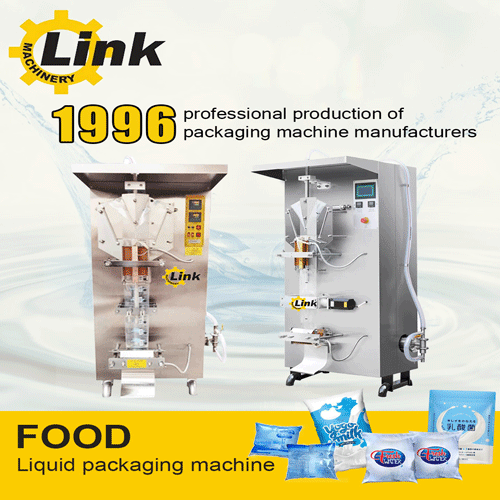
    If you have ever worked in a beverage factory, food processing workshop or daily chemical production line, then you must be familiar with liquid packaging machines. However, facing the various equipment models on the market - from fully automatic liquid packaging machines to water packaging machines, many people are still confused. Today we will dismantle these concepts, reveal their price differences, and help you find the most suitable solution!   What is a fully automatic liquid packaging machine Fully automatic liquid packaging machines refer to intelligent packaging machinery and equipment that can independently complete the entire process of "bag making → filling → sealing" without manual intervention.   Applicable scenarios: (1) Bag-packed beverages such as mineral water and juice (filling more than 200 bags per minute). (2) Viscous liquids such as soy sauce and cooking oil (screw pump system is required). (3) Daily chemical products such as liquid shampoo bags and shower gels (supports multiple bag types such as back-sealed bags and self-supporting bags).     Liquid filling machine Key difference: Liquid filling machine is only responsible for filling, and other equipment (such as sealing machine, labeling machine) is required to complete the complete packaging. Typical applications: bottled water production line, barreled edible oil filling.   Advantages: (1) Made of 316 stainless steel to prevent heavy metal pollution. (2) Equipped with aseptic filling system (air purification level reaches ISO 5 level).     Why are liquid bag filling machines becoming more and more popular? In recent years, the sales of bagged beverages (such as juice and plant protein beverages) have skyrocketed, bringing a type of equipment - liquid bag filling machine. Its core competitiveness lies in two points:   (1) Save money: directly use roll film materials to make bags on site, which is 40% cheaper than buying pre-made bags. (2) Flexibility: switch packaging specifications within 10 minutes (from 200ml children's pack to 1L family pack).   Let's look at a real example: After a coconut juice brand switched to an FFS (bag making-filling-sealing) all-in-one machine, the packaging cost dropped from 0.15 yuan/bag to 0.09 yuan/bag, saving more than 3 million yuan per year!   How much does a fully automatic liquid packaging machine cost? When you search for "fully automatic liquid packaging machine price", you may find that the price ranges from a few thousand yuan to tens of thousands of dollars. Why is the gap so big? It mainly depends on the following 4 points:   Price influencing factors (1) The price of the machine ranges from low to high. The price of a smarter, simpler to operate, and less human intervention machine will be higher.   (2) Filling speed The price difference between the packaging speed of a liquid packaging machine of 80-150 bags/minute and 200-500 bags/minute is also very lar...
1 ... 14 15 16

A total of 16 pages

Leave A Message
Leave A Message
If you are interested in our products and want to know more details,please leave a message here,we will reply you as soon as we can.

Home

Products

whatsapp