
When you pick up a box of pills, a box of chocolates, or small electronic accessories, you'll notice the packaging style produced by blister packaging machines. This common form of packaging features transparent plastic pouches (blisters) sealed onto backing materials like aluminum foil or cardboard. But what exactly is this machine? How does it work? And in which fields is it applied? Today, we'll provide you with a comprehensive introduction through this article.
What is a blister packaging machine?
A blister packaging machine is a type of packaging equipment used to form individual plastic blisters, fill them with products, and seal them with backing material. It is primarily designed to create protective packaging that effectively shields products from moisture, dust, and physical damage while facilitating product display and retrieval. This equipment achieves full-process automation—from shaping to sealing, cutting, and final packaging—all performed through highly automated operations. Compared to manual packaging, it not only saves time but also ensures consistent product quality.
In the pharmaceutical industry, this equipment is also known as a blister packaging machine or PTP (Punch-Through Packaging) machine, widely used in the packaging production of tablets and capsules.
Main Types of Blister Packaging Machines
Blister packaging machines require customization based on product dimensions, shapes, and production volumes. The three most common models are:
1. Roller-Type Blister Packaging Machine
This equipment uses rotating rollers to complete forming and sealing processes, suitable for simple small items like tablets and small candies. Core advantages: high-speed continuous operation, compact structure, and lower cost. However, it is limited to shallow blisters (depth ≤12mm) and simple shapes.
2. Flat-Plate Blister Packaging Machine
Utilizes flat molds with compressed air forming to produce high-precision, premium blisters. Suitable for large products, deep blisters (depths up to 35mm+), or complex shapes like medical devices and electronic components. The flat-plate sealing mechanism ensures consistent, tight seals. Operates in batch production mode (slower than roller machines) but carries a higher cost relative to other packaging machinery.
3. Roller-Flat Hybrid Blister Packaging Machine
A hybrid model combining flat-plate forming with roller sealing (high-speed production). As the most versatile option, it is widely used in pharmaceuticals, food, and hardware sectors. Examples include small box packaging for honey or ketchup. Balancing speed (up to 100 cycles/minute) and precision, it is the preferred equipment for medium to large production lines.
In which fields are blister packaging machines applied?
With their outstanding packaging aesthetics and product display capabilities, blister packaging machines are indispensable across multiple industries. Primary application areas include:
(1) Pharmaceutical Industry
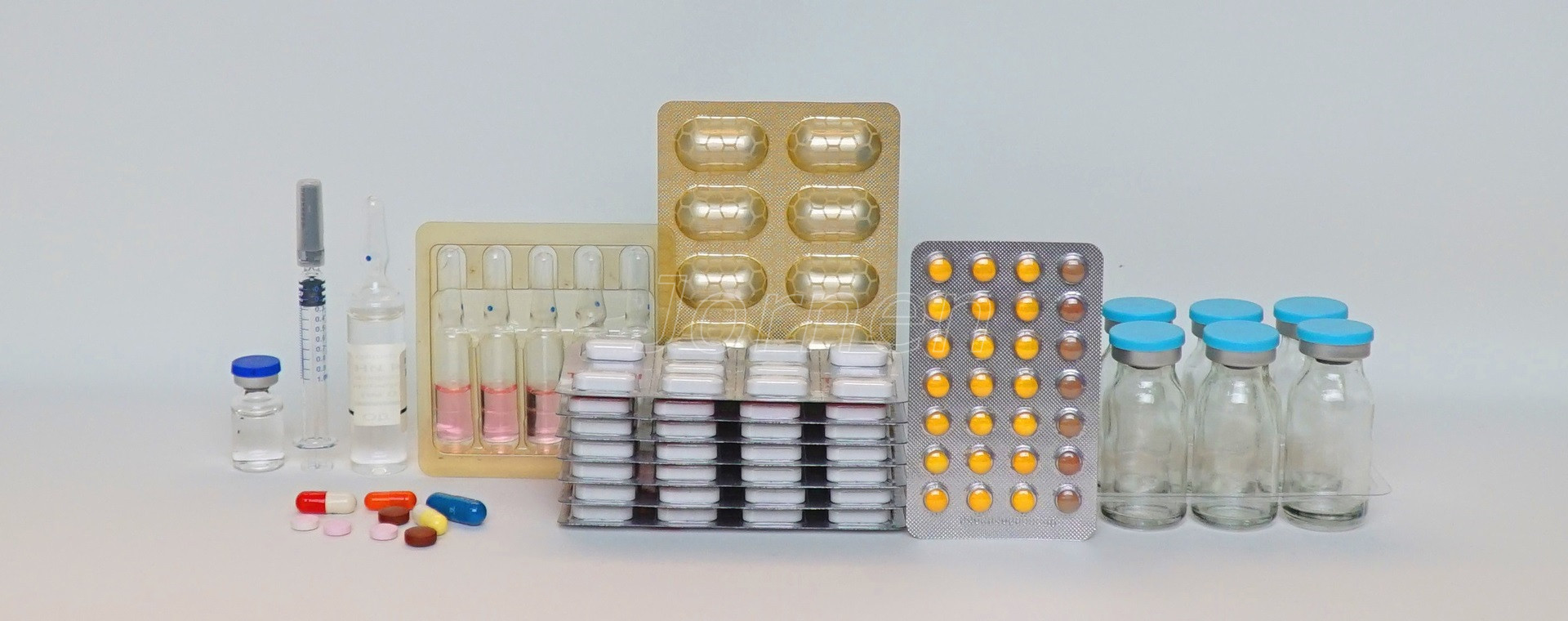
As the largest user of blister packaging machines, this sector encapsulates tablets, capsules, suppositories, and medical devices within aluminum foil blister packs. This approach maintains pharmaceutical sterility and dryness while facilitating distribution and dispensing, all while complying with stringent GMP (Good Manufacturing Practice) standards.
(2) Food Industry
Widely used for candies, chocolates, cookies, dried fruits, and frozen foods. Transparent blisters showcase products while sealed designs block air and moisture to extend shelf life. Food-grade plastics like PET or PP ensure safety.
(3) Electronics & Hardware Industry
Small electronic components (headphones, data cables, USB drives), screws, nuts, and tools often use blister packaging. Rigid plastic protects delicate parts from damage, while transparency allows customers to view products without opening the package.
(4) Cosmetics and Daily Necessities
Lip balms, razors, toothbrushes, and small skincare tools utilize blister packaging for neat shelf displays. The sealed design maintains product cleanliness and prevents tampering.
Key Components of Blister Packaging Machines
Standard blister packaging machines consist of multiple core components that work together to ensure a smooth and efficient packaging process. Each part plays a critical role in the forming, filling, sealing, and final shaping stages of blister packaging.
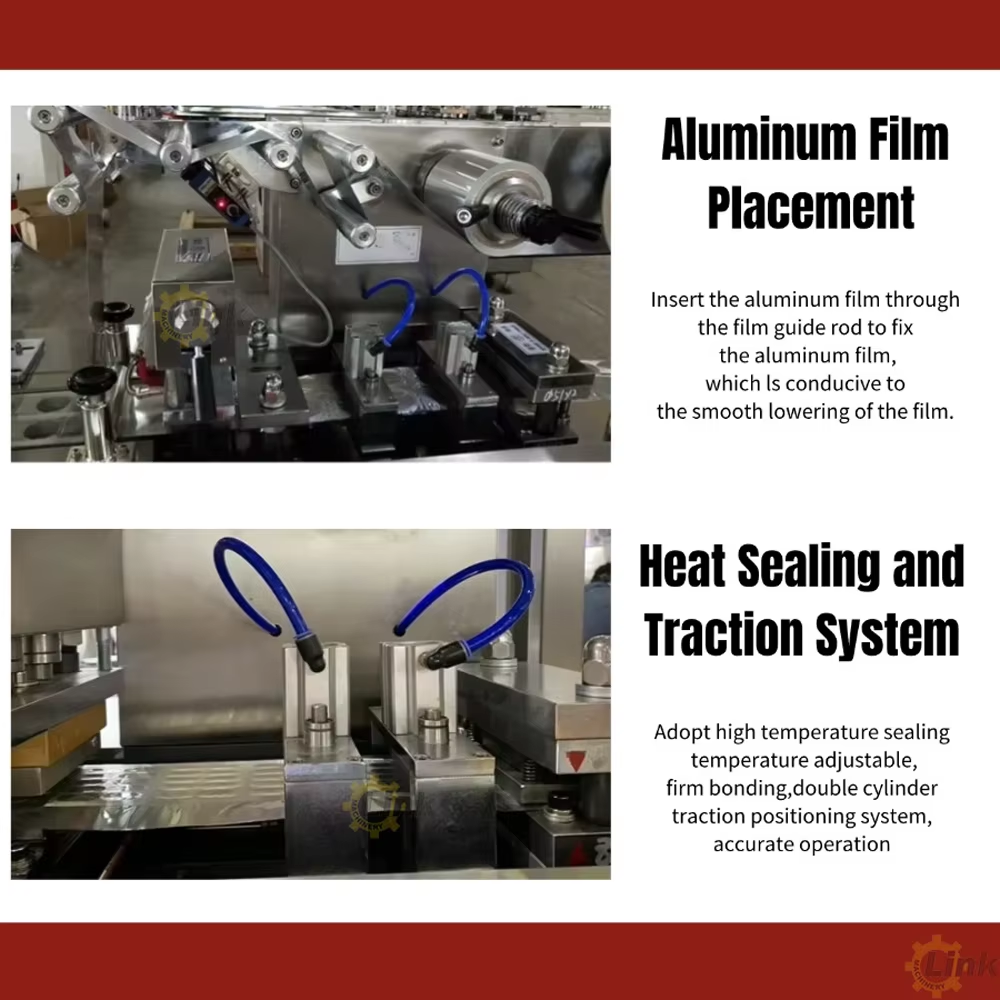
(1) Feeding System: Comprises two major components—the thermoplastic film (PVC, PET, PP) feeding unit and the backing material (aluminum foil, cardboard) feeding unit. The film feeding unit uses rollers to uniformly convey material into the machine, laying the foundation for PVC blister packaging and other material applications.
(2) Heating Unit: Equipped with heating elements that soften plastic sheets to a pliable state for forming into blisters. Precise temperature control is essential here to prevent overheating damage to the plastic, which is critical for high-quality blister packaging.
(3) Forming Station: As the core of the blister packaging machine, this station uses molds, vacuum pressure, or compressed air to shape the softened plastic into blisters. Molds can be customized to accommodate various product sizes and shapes, ranging from small blister packs for tablets in PTP machines to large packaging bags for electronics.
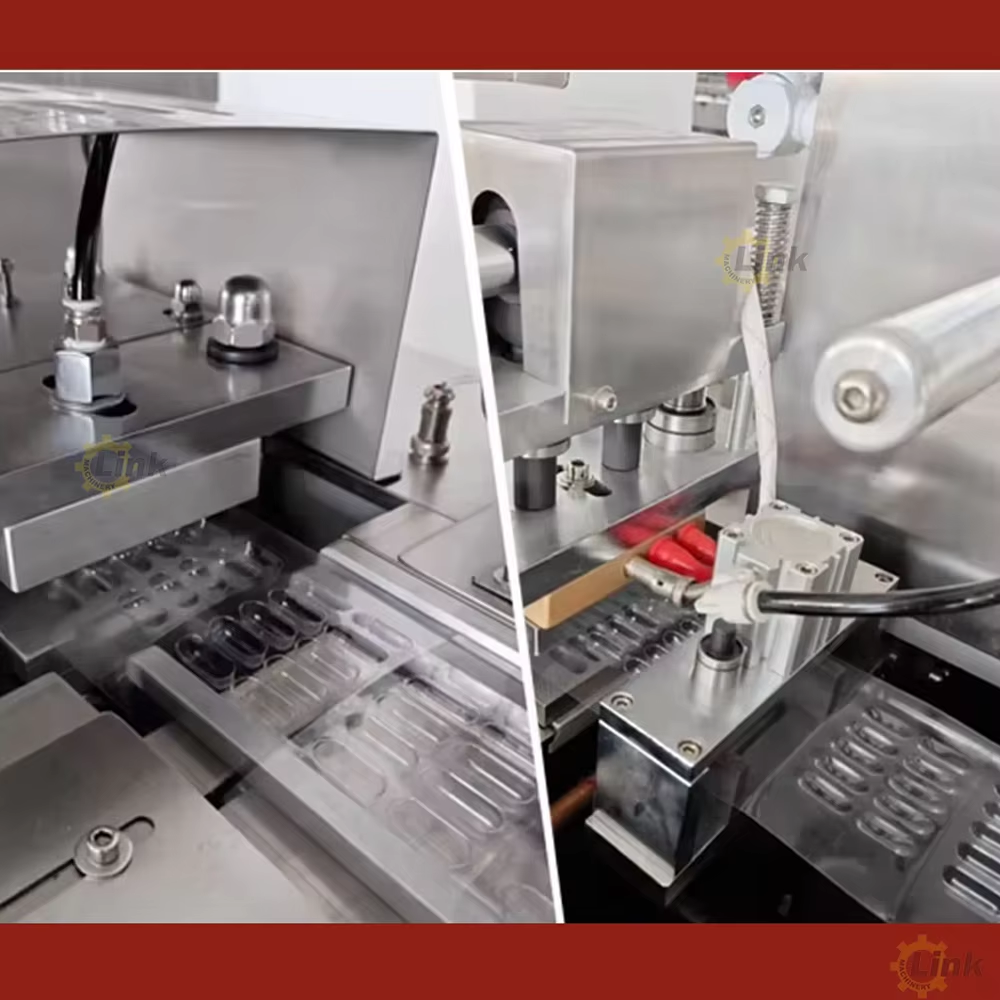
(4) Filling Mechanism: Depending on production requirements, either manual (for small batches) or automatic (for mass production) modes can be employed. Automatic feeding devices precisely place products into each blister cavity, ensuring zero empty packs and consistent positioning—a critical requirement in the pharmaceutical industry.
(5) Sealing Unit: Secures backing material to plastic blister packaging. Forms a tight seal via heat-press technology; select premium models feature adjustable temperature and pressure settings to accommodate diverse material requirements, enhancing packaging aesthetics.
(6) Cutting Station: After sealing, this component cuts continuous film into individual or multi-pack strips. Precision blades ensure clean cuts; some machines incorporate tear lines for customer convenience.
(7) Control Panel: Features intuitive operation with buttons, touchscreens, or digital interfaces for adjusting speed, temperature, pressure, and other parameters.
(8) Conveying and Collection System: Transfers finished packages from the cutting station to the collection area. This system ensures continuous operation while preventing damage to final blister packs. The entire process employs highly efficient automated packaging, minimizing manual intervention.
Core Advantages of Using Blister Packaging Machines
For businesses, investing in blister packaging machines offers multiple benefits:
(1) Efficiency: Achieves full-process automation, significantly boosting output (35 to 100+ packs per minute, depending on model).
(2) Protection: Creates airtight, moisture-proof seals to ensure product safety during storage and transportation.
(3) Versatility: Compatible with diverse plastics, backing materials, and product dimensions—mold changes are straightforward, facilitating seamless adaptation for new product lines.
(4) Compliance: Integrated label printing and batch coding functions meet industry standards (e.g., GMP regulations in pharmaceuticals).
(5) Cost-Effectiveness: Fully automated production reduces labor costs and material waste, making it particularly suitable for high-volume manufacturing.
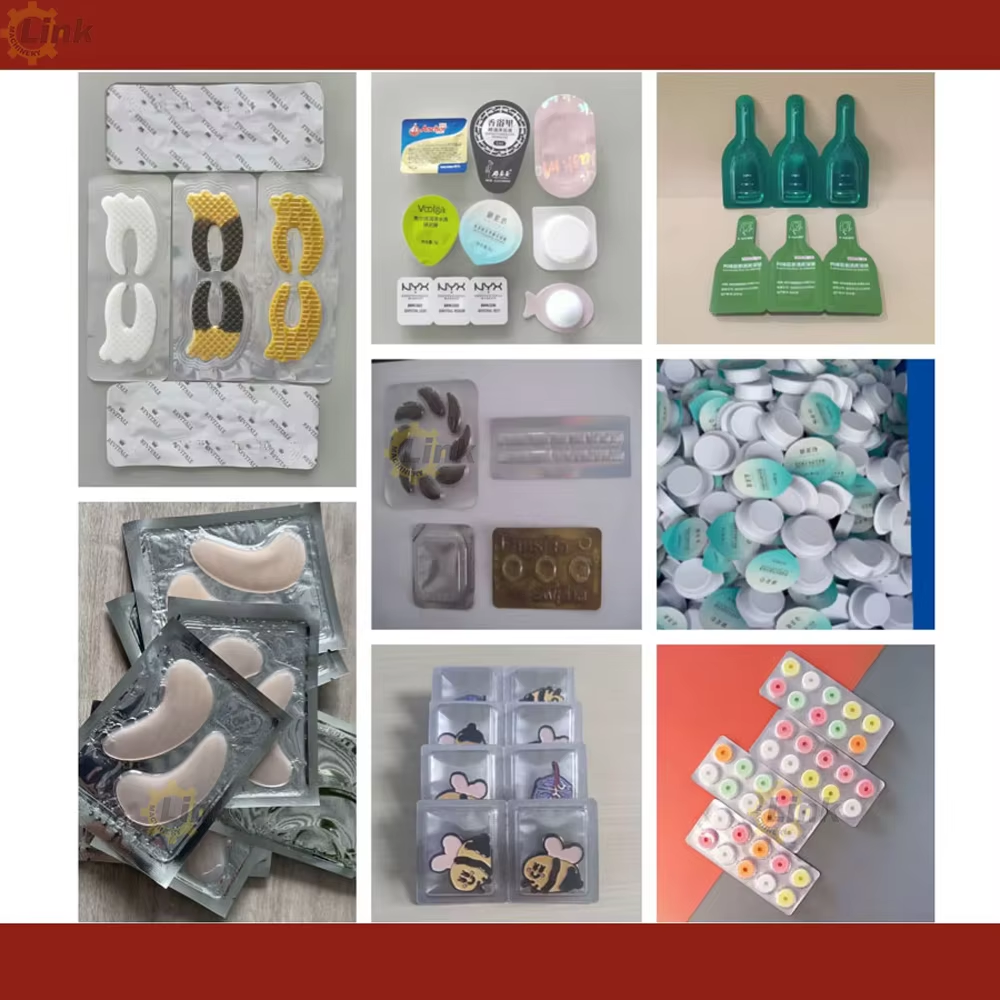
Blister packaging machines are core equipment in modern packaging, quietly supporting the products we use daily. Whether you're a pharmaceutical company requiring sterile packaging or a small business selling handicrafts, there's always a model to meet your needs. Understanding their types, working principles, and application scenarios will help you select the right equipment, optimize production processes, and ensure product safety.
Blister machinery comes in two main forms: a full blister line packaging system for high-volume pharma production, and a compact table top blister machine for labs and small batches. Both form transparent blisters and seal them to foil or card. See LINK's blister packaging machine range.

Email : Molly@xmlk-machine.com
EMAIL us
Room 810, No. 35-2 Xinjing Road, Haicang, Xiamen, Fujian, China
Our Address
Tel : +86 18150150881
Whatsapp : +8618150150881
call us


 English
 français
 português
 ไทย