

Whether in a home kitchen or a food processing plant, a grain grinder/mill is a powerful assistant for processing grains such as wheat, corn, and oats. It uses mechanical force to crush grains into flour or adjustable coarse and fine particles to meet the diverse needs of baking, brewing, and complementary food production. This article will deeply analyze the core knowledge of grain grinders, covering types, functions, usage methods, and market prices, and especially introduce the unique advantages of vertical grinders.
What is a grain grinder?
A grain grinder is a mechanical device that crushes dry grains into powder or particles by physical rolling or shearing force. Its core component is a pair of horizontally or vertically arranged grinding discs (metal, stone, or ceramic materials), and the size of the finished particles is controlled by adjusting the spacing between the grinding discs. Compared with traditional stone mortars, modern grinders are more efficient and hygienic, and can accurately meet the needs of different recipes.
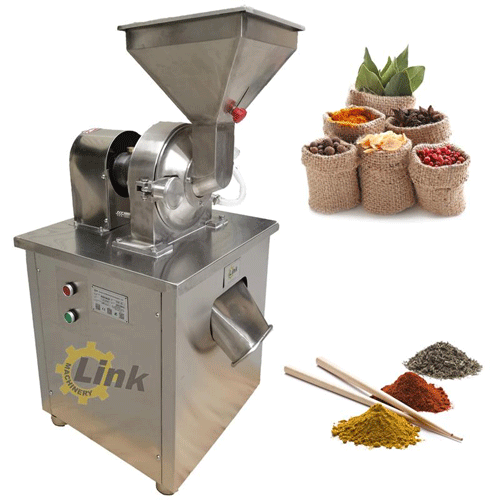
Four types of grinder
According to the design and working principle, common mills can be divided into the following four categories:
Manual grinder
Simple structure, relying on hand crank or lever to drive the grinding disc, suitable for small batch grinding (such as coffee beans, a small amount of grains).
Advantages: portable, low noise, no power consumption; Disadvantages: low efficiency, the coarseness of grinding depends on manual control.
Electric household grinder
Built-in motor drive, the coarseness of the powder is controlled by adjusting the distance between the grinding discs, suitable for daily household use (such as making whole wheat flour, complementary food).
Common materials: food-grade stainless steel or ceramic grinding discs to avoid metal pollution.
Stone grinder
Using natural stone grinding discs, low-speed grinding reduces heat generation, retains grain nutrition and flavor, and is often used in traditional flour workshops or healthy food production.
Vertical grinder
Commercial-grade equipment, the grinding disc spindle is arranged vertically, the structure is compact and space-saving, and it is suitable for continuous large-scale processing (such as flour mills, brewing raw material processing).
Advantages: high efficiency, easy to clean, some models support automatic feeding and multi-stage screening.
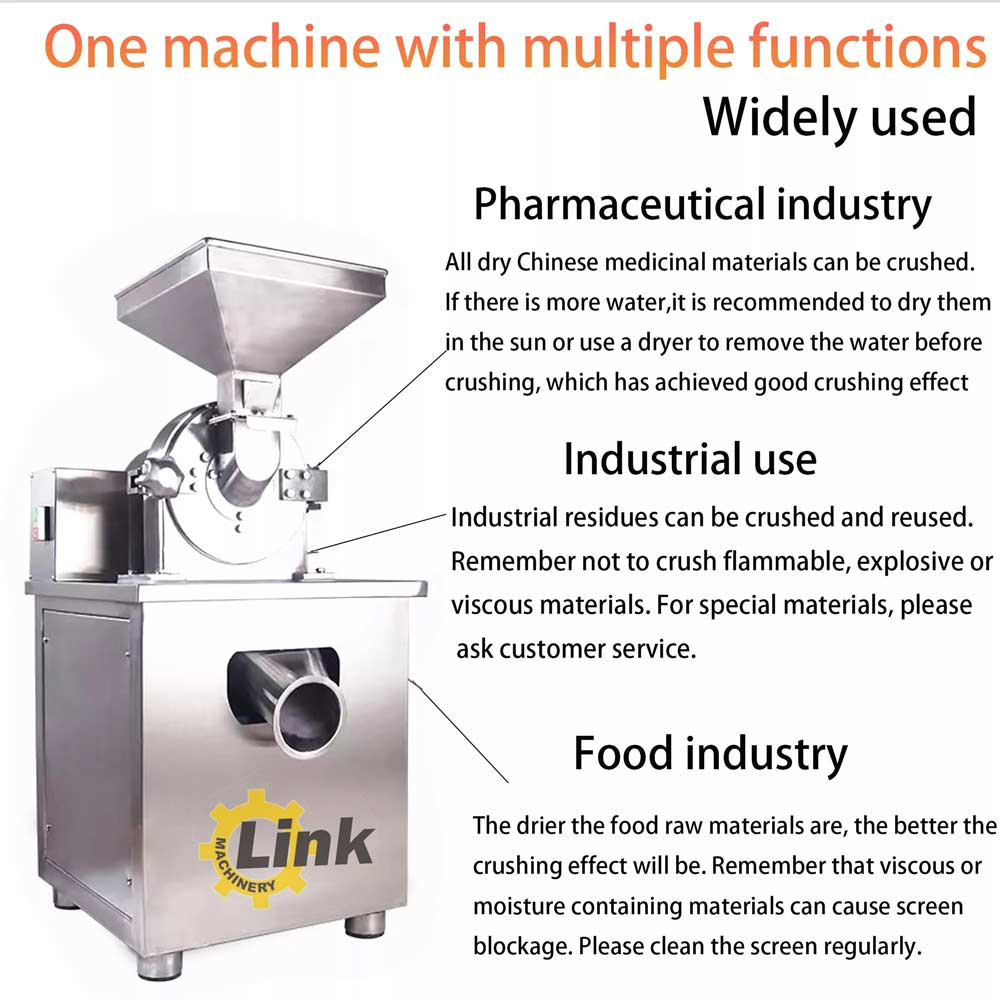
Main uses of grinder
In addition to basic crushing functions, different models can meet different needs:
(1) Control particle size: from coarse particles (such as oatmeal) to fine flour (suitable for cake baking).
(2) Preserving nutrition and flavor: Low-speed stone grinding reduces high-temperature oxidation and preserves the vitamins and natural aroma of grains.
(3) Special food processing: grinding spices (such as pepper), beans (such as chickpea flour) and even making nut butter.
(4) Industrial application of vertical mills: In large-scale food processing, the vertical design can efficiently process tons of grains and integrate automated processes such as dust removal and packaging.
How to use a grain grinder correctly?
Safe operation and equipment maintenance directly affect the grinding effect and machine life:
1. Preparation before use
Cleaning the grinding disc: Before using a new machine for the first time, it is necessary to "grind" with dry grains to remove residual debris.
Check the power supply (motor model): Ensure that the voltage is stable to avoid motor overload.
2. Grinding steps
Adjust the coarseness: First try coarse grinding, and gradually adjust to the target particle size (such as flour requires multiple fine grinding).
Control the feed rate: Avoid pouring too much grain at one time to cause the machine to jam (vertical grinders are usually equipped with automatic feeders).
Pay attention to heat dissipation: When working continuously, it is recommended to pause cooling every 15-20 minutes for electric models.
3. Cleaning and maintenance
After power off, remove the grinding disc and clean the residual powder with a soft brush. Avoid rinsing with water (unless the material is marked as washable).
Oil the bearings regularly (manual model) and check the wear of the motor carbon brushes (electric model).
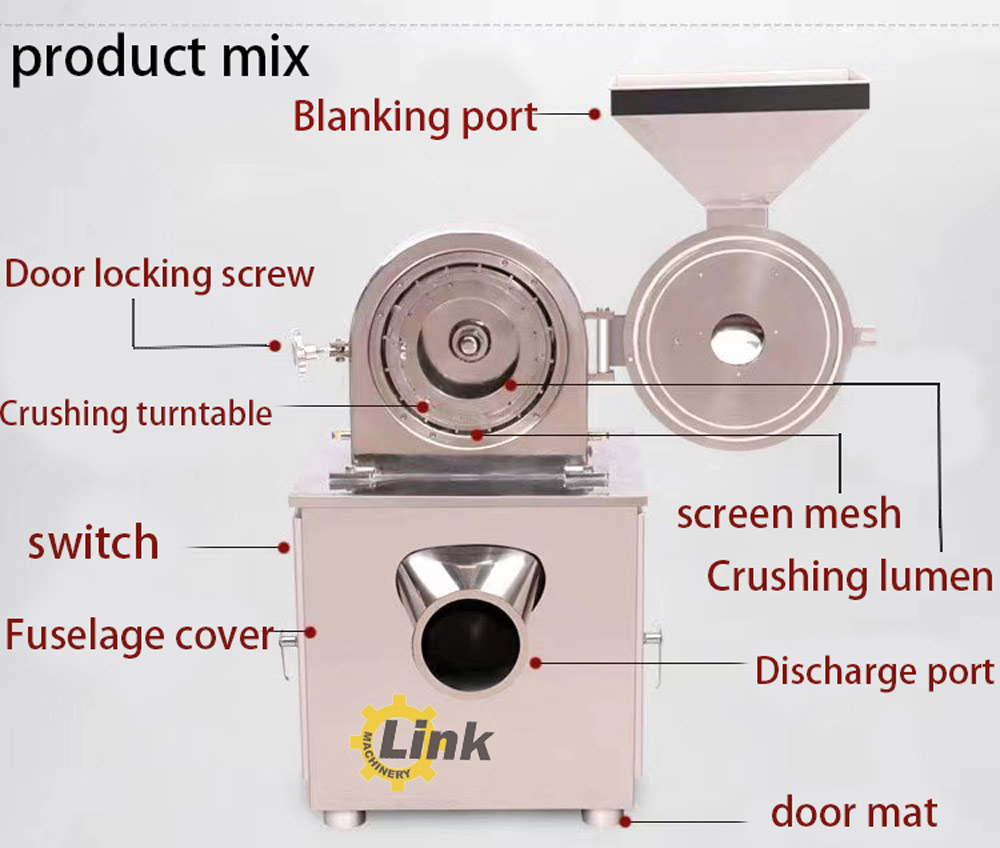
Grain grinder price reference
Prices vary greatly depending on the model, capacity, and material
Manual grinder:
Suitable for families with limited budgets or occasional use, the price is relatively low at a few dozen yuan.
Vertical commercial grinder:
Commercial grinders are more intelligent to operate and reduce manpower use, and the price will be between a few hundred yuan.
The special features of vertical grinders:
In commercial scenarios, the vertical structure reduces the footprint of the equipment, uses gravity to optimize the feeding process, and is equipped with a high-speed motor to achieve hundreds of kilograms of output per hour. It is the first choice for large grinders food processing plants.
Practical advice
Avoid mold growth.
Commercial purchases need to pay attention to after-sales service and spare parts supply.
If you pursue extreme nutrition, but need to accept lower efficiency.
Whether it is a home helper or an industrial vertical mill, reasonable selection and correct operation can make grain processing more efficient. Or find a supplier to conduct sample trial grinding and find the most suitable "milling expert"!
Other questions
If you want to consult our mill, can you tell me?
(1) What is the feed particle size?
(2) What is your expected production capacity? (kg/h)
(3) What mesh, millimeter or micron (size) do you want the powder to be?
(4) What voltage do you want?
(5) Stainless steel.

Email : Molly@xmlk-machine.com
EMAIL us
Room 820, No. 289-7, wengjiao Road, xiamen, Fujian, China
Our Address
Tel : +86 18150150881
Whatsapp : +8618150150881
call us


 English
 français
 português
 ไทย
ไทย