
A new line can hide bottlenecks, slow changeovers, and disputed acceptance tests. These problems surface only after delivery, when fixes cost time and money. This guide shows a clear packaging line design process. It runs from product data to final acceptance, so your purchase decision stays in control.
A supplier cannot quote a sound line without exact product data. Wrong data leads to the wrong machine, so start with a complete data sheet. List product size, shape, weight, and pack format in one table. Add target output and peak demand to the same table.
Send the sheet to the supplier before you ask for a price. Ask for a written quote against that sheet, with output, pack quality, and changeover time stated.
For example, a line must ship 100 good packs an hour at 75 percent OEE. The supplier must size the gross rate above that target. A data sheet without that target invites a quote that fits the brochure, not the order.
The SKU list sets the line balance, so plan capacity around the real mix. List every SKU with its batch size and changeover frequency. Rank the SKUs by output and mark the top ones that set the line speed. A line built for one pack stalls when the next pack arrives.
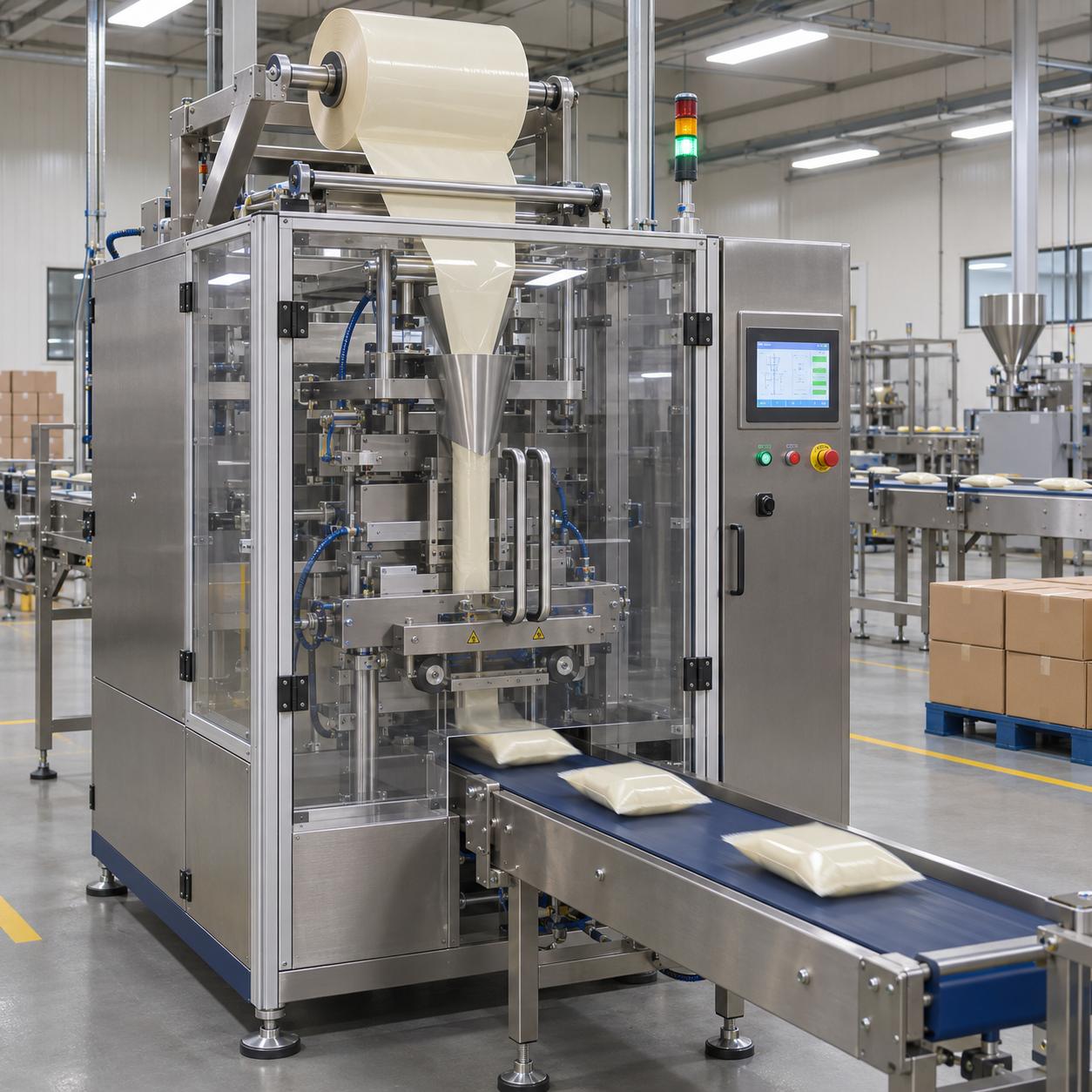
The primary machine sets seal quality and pack appearance, so match it to the product first. Send the same product data sheet to every supplier. Ask each supplier to quote against that sheet, not against a brochure. Compare the quotes side by side on output, pack format, and changeover time for the same packaging line design.
Ask each supplier to state the OEE it guarantees. A typical food line runs at 55 to 75 percent OEE, and a world-class target is 78 to 83 percent. Compare quotes only when every supplier answers the same target.
The back of the line needs the same care as the front. Ask the supplier to show the end-of-line rate next to the primary machine rate. The two rates must match at target output, or the back of the line becomes the bottleneck. Write both rates into the quote request.
Check that the primary rate sits 5 to 10 percent above the line rate. That margin keeps one slow station from halting the line.
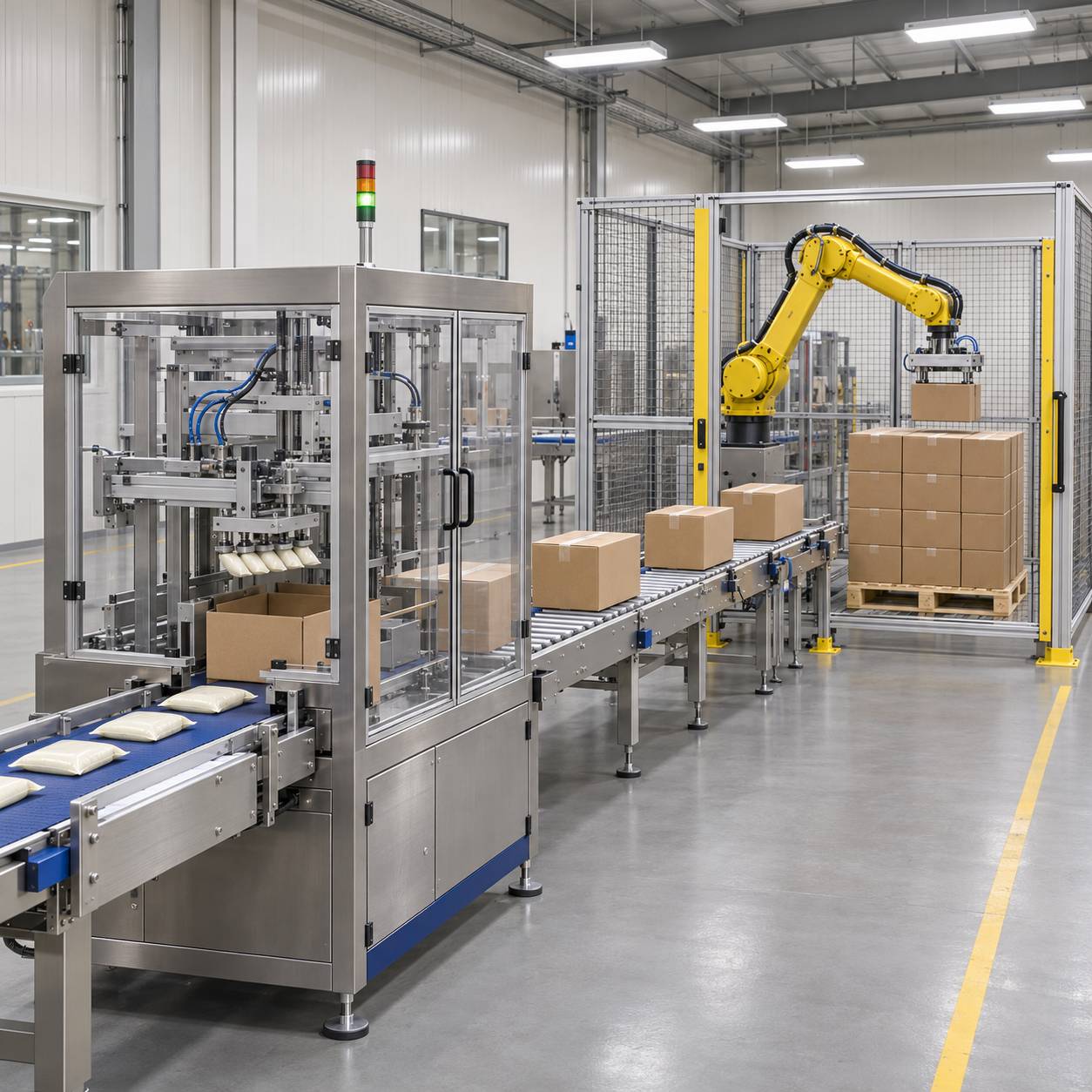
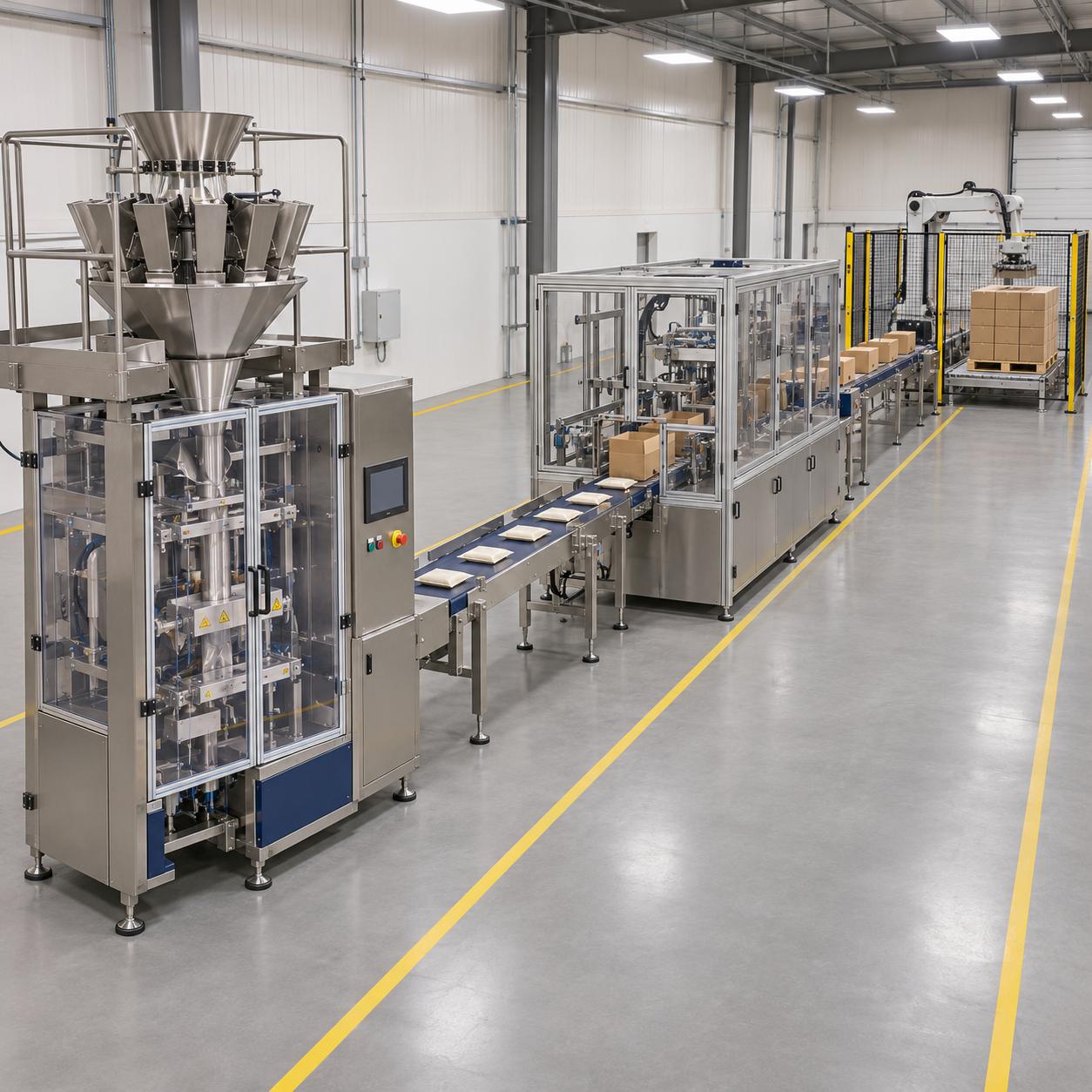
The layout must fit the floor, the product flow, and the operator path. Measure the floor first, then choose between the two shapes for your packaging line design. Pick a straight layout for a long floor with simple product flow. Pick a U-shaped layout for a compact floor with shared operator stations.
Tight corners slow service work and block later upgrades. Draw the future station on the layout before you order the line. Reserve clear access space for cleaning, service, and that future station. Adding space later costs far more than planning it now.
A cramped layout adds setup and adjustment time, one of the six big losses. A typical food line runs at 55 to 75 percent OEE. Poor access pushes the line toward the low end of that range.
OEE measures line performance as availability times performance times quality. An example target is 85 percent availability, 90 percent performance, and 98 percent quality, which gives 75 percent OEE. Write that target into the quote request, so every supplier quotes against the same number.
The slowest station sets the line rate, so find it before you size the equipment. Add a 5 to 10 percent margin at that station, then set equipment speed above the line rate. Write the margin into the specification, so the supplier builds the buffer in.
The gap between 55 percent and 83 percent OEE shows the value of a measured packaging line design. Do not accept a guessed rate when a measured target costs nothing to write down.
The factory test must run the real product, the real pack, and the real changeover. Write an acceptance checklist before the test, with output, pack quality, seal quality, changeover time, and OEE. Record every result in writing, so later disputes have a clear record.
Set the acceptance target at 75 percent OEE: 85 percent availability, 90 percent performance, and 98 percent quality. The line passes only when the trial hits that target.
The on-site trial must prove the line under normal working conditions. Run a full shift with the normal team and normal materials. Accept the line only after the trial meets the agreed targets in writing.
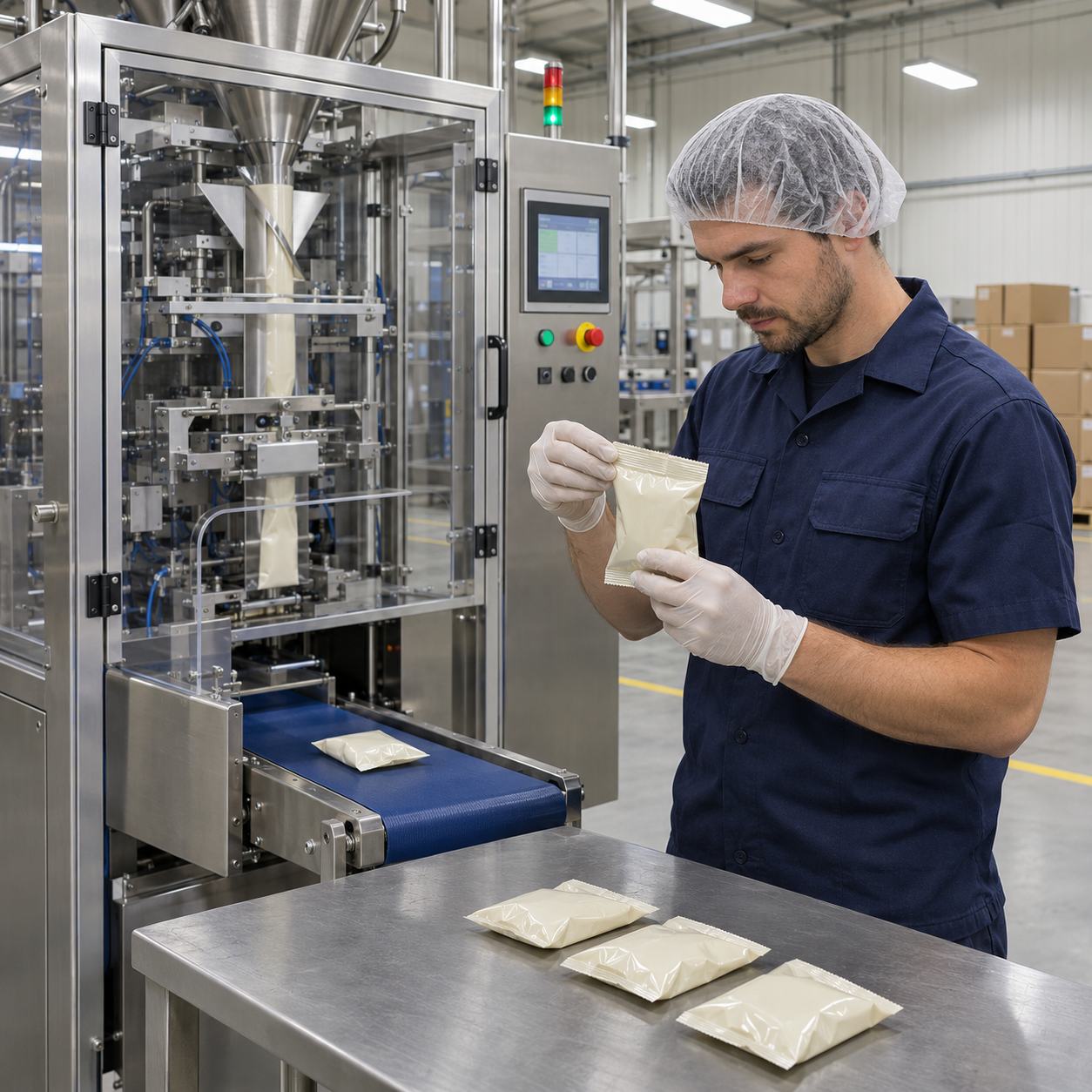
A sound packaging line design starts with clear product data and ends with a proven acceptance test. Plan the layout, protect the bottleneck, and measure OEE before you buy. Contact LINK Machinery to discuss the line.
1. What data does a packaging line design need first?
Send the data in one table, with the largest and smallest packs first. Ask the supplier to confirm in writing that the line handles both extremes.
2. How do you calculate the bottleneck in a packaging line design?
Record each station rate at target output and name the slowest station the bottleneck. Fix that station first, then remeasure its rate before you size the rest.
3. Which indicators matter in packaging line design acceptance?
Set acceptance at the world-class floor of 78 percent OEE, and test it over a full shift. The line passes only when the trial hits that number in normal conditions.
4. How does a packaging line design leave room for later expansion?
Mark one empty station bay on the layout, as an example of future space. Keep its power and air points ready, so a later station drops in without moving it.
5. Should a small factory start with one machine or a full packaging line design?
Start with one machine when the SKU list is short and output is low. Choose a full line when several stations share one flow, so growth needs no layout rebuild.
6. How do you measure OEE in a packaging line design?
Record the six big losses over one full shift, by station. Fix the largest loss first, then remeasure OEE before you set the next target.
7. How do you compare quotes for a packaging line design?
Divide each quoted price by the agreed output to compare cost per good pack. Use the same output for every quote, so a cheap price cannot hide a slow line.

Email : Molly@xmlk-machine.com
EMAIL us
Room 810, No. 35-2 Xinjing Road, Haicang, Xiamen, Fujian, China
Our Address
Tel : +86 18150150881
Whatsapp : +8618150150881
call us


 English
 français
 português
 ไทย