

In the food processing, catering industry and fresh food supply chain, commercial food vacuum packaging machines have become the core equipment for extending the shelf life of food and maintaining its quality. Whether it is meat, seafood, dry goods or pre-prepared dishes, vacuum sealing technology can effectively isolate oxygen and moisture and inhibit bacterial growth. This article will explore in depth how to choose a suitable vacuum packaging machine, analyze its types, functions and scope of application, and recommend reliable packaging machine manufacturers and consumables solutions.
What is a vacuum sealing packaging machine?
A vacuum sealer is a device that removes air from the packaging bag and seals it, leaving the food in a vacuum state, thereby delaying oxidation and spoilage. Commercial models usually have the characteristics of high efficiency, strong durability, and support for continuous operation. They are suitable for food processing plants, central kitchens, large restaurants and other scenarios. Its core advantages are:
(1) Extending the shelf life: The vacuum environment can reduce the risk of food spoilage, and the refrigerated shelf life of meat can be extended by 3-5 times.
(2) Saving space: The vacuum packaging is compact and easy to store and transport.
(3) Prevent frostbite and odor transfer: especially suitable for frozen foods and flavor-sensitive products.
Two main types of vacuum sealers
Based on the working principle and applicable scenarios, vacuum packaging machines can be divided into the following two categories:
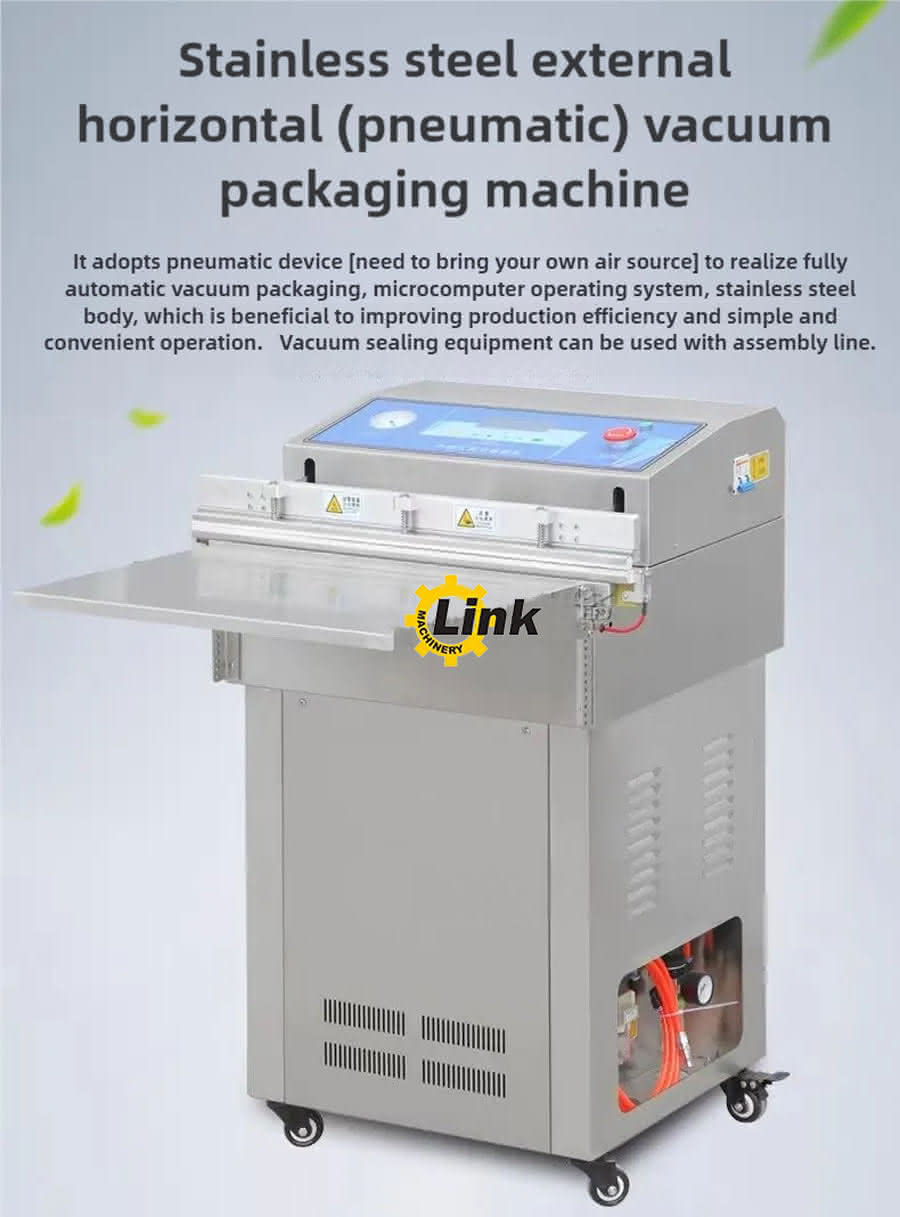
External Vacuum Sealer
Features: Insert the external vacuum nozzle into the packaging bag for vacuuming, suitable for large-sized or special-shaped items (such as whole ham, irregular cakes).
Advantages: Strong flexibility, can handle thicker packaging materials; some models support the "seal only" function.
Applicable scenarios: bakery workshops, meat processing plants, bulk agricultural product packaging.
Chamber Vacuum Sealer
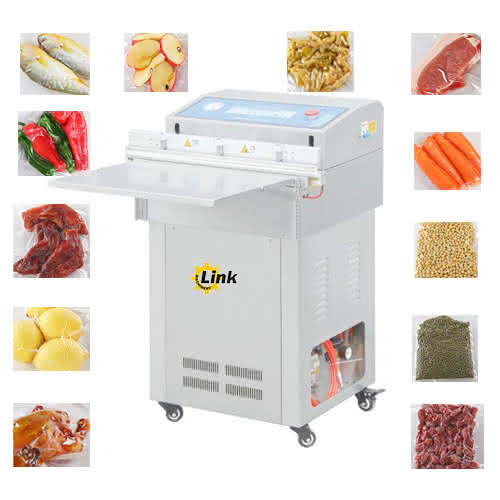
Features: Place the packaging bag in a sealed chamber for overall vacuuming, suitable for liquids, powders or small ingredients (such as sauces, coffee beans).
Advantages: Higher vacuum degree (up to 99% or more), more stable sealing effect.
Applicable scenarios: pre-prepared food production, seafood processing, ready-to-eat food packaging.
How to choose the best food vacuum sealer?
When purchasing a commercial food vacuum packaging machine, you need to consider the following factors:
(1) Packaging demand and production capacity
For low-volume scenarios (such as small restaurants): semi-automatic models can be selected, which are low-cost and easy to operate.
(2) For high-volume production lines (such as food processing plants): commercial vacuum packaging machines are recommended, which support continuous operation and customized programs.
Material and durability
Preferably choose a stainless steel body and an industrial-grade pump body to ensure long-term stable operation.
Check the high-temperature resistance of the sealing strip (silicone material is recommended) to avoid frequent replacement.
(3) Functional scalability
Some models support additional functions such as nitrogen filling and QR code marking, which are suitable for high-end food brands.
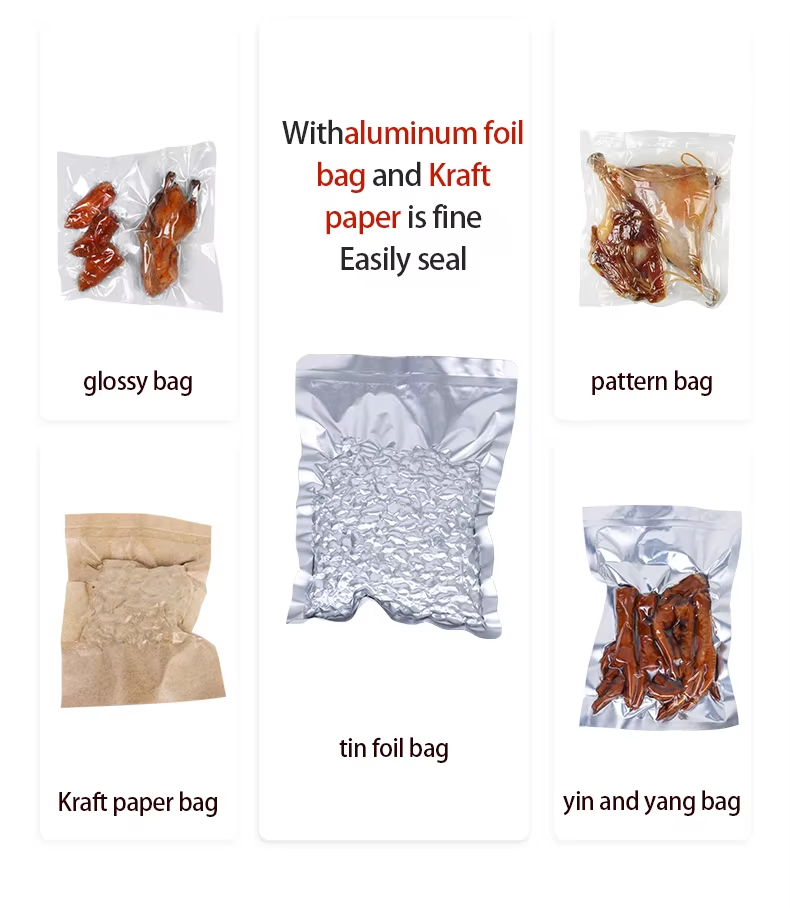
Confirm whether it is compatible with vacuum packaging machine bags of various sizes (such as PA/PE composite bags and aluminum foil bags).
(4) Manufacturer qualifications and after-sales service
Choose packaging machine manufacturers that have passed ISO certification, and give priority to brands that provide local technical support.
Request a trial period or warranty service to reduce the risk of equipment failure.
What products can be packaged by Vacuum Sealer Machine?
The application scope of vacuum sealers far exceeds traditional cognition and covers the following areas:
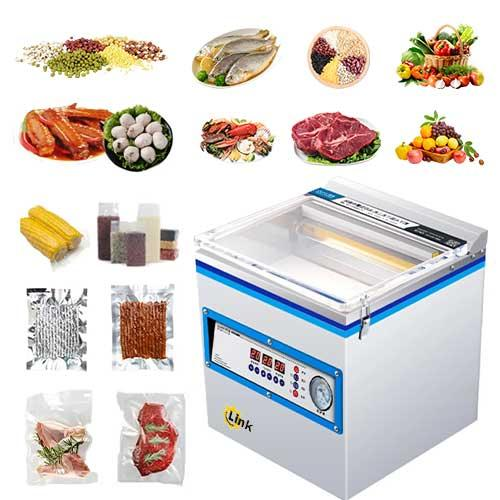
Fresh food: steak, seafood, cheese, vegetables (requires modified atmosphere packaging).
Dry goods and powders: coffee beans, nuts, spices, milk powder.
Industrial parts: electronic components, medical devices (moisture-proof and anti-oxidation).
Note: Liquid foods need to use internal pumping models and control the vacuuming time to avoid liquid overflow.
How to choose the best vacuum food packaging machine?
(1) High-quality vacuum packaging machine bags directly affect the sealing effect and preservation performance, and attention should be paid to:
(2) Material: Multi-layer composite materials (such as PET/PE) are both puncture-resistant and low-temperature resistant.
(3) Thickness: Commercial bags are recommended to be 80-150 microns to adapt to high-frequency handling.
(4) Compliance: Food grade certification (FDA, EU standards) to ensure safety and pollution-free.
Whether it is to enhance the commercial value of food or optimize supply chain management, an efficient commercial food vacuum packaging machine is an indispensable investment. By clarifying their own needs, comparing the performance of models, and choosing a packaging machine manufacturer with good reputation, enterprises can achieve the dual goals of cost control and quality upgrade. It is recommended to request sample testing before actual purchase to ensure the compatibility of equipment and consumables, laying the foundation for long-term stable production.

Email : Molly@xmlk-machine.com
EMAIL us
Room 820, No. 289-7, wengjiao Road, xiamen, Fujian, China
Our Address
Tel : +86 18150150881
Whatsapp : +8618150150881
call us


 English
 français
 português
 ไทย
ไทย