
An underweight pack can mean a fine, a recall, or a lost customer. An overweight pack gives away product on every run.
This guide shows you how a checkweigher protects your line. It covers accuracy, compliance, and how to choose and run one.
A checkweigher weighs every pack on the line, not a sample. It catches underweight and overweight packs before they reach the customer.
A dynamic unit weighs each pack as it moves on a belt. A load cell under the belt reads the weight in milliseconds. The line never stops, so output stays high while every pack gets checked.
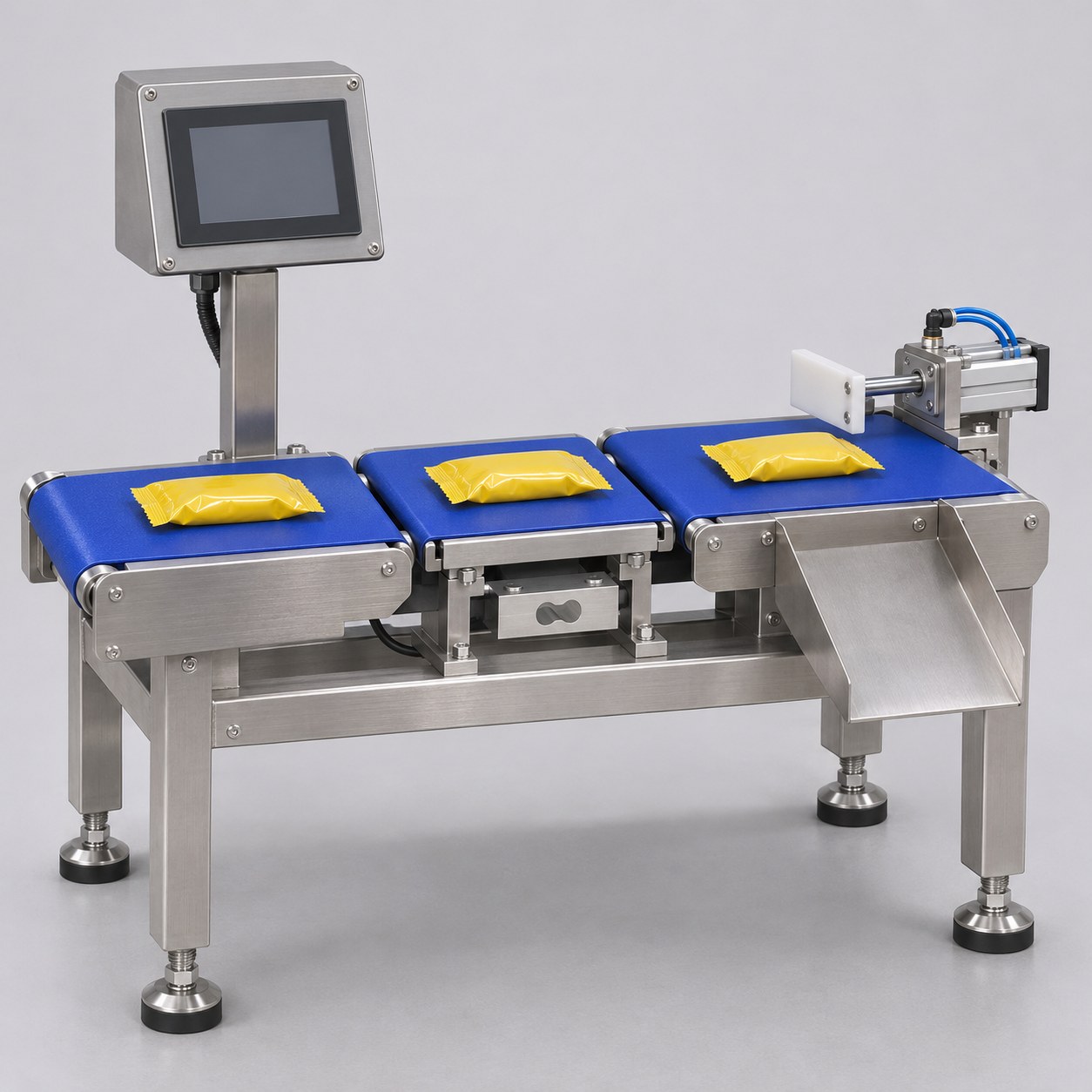
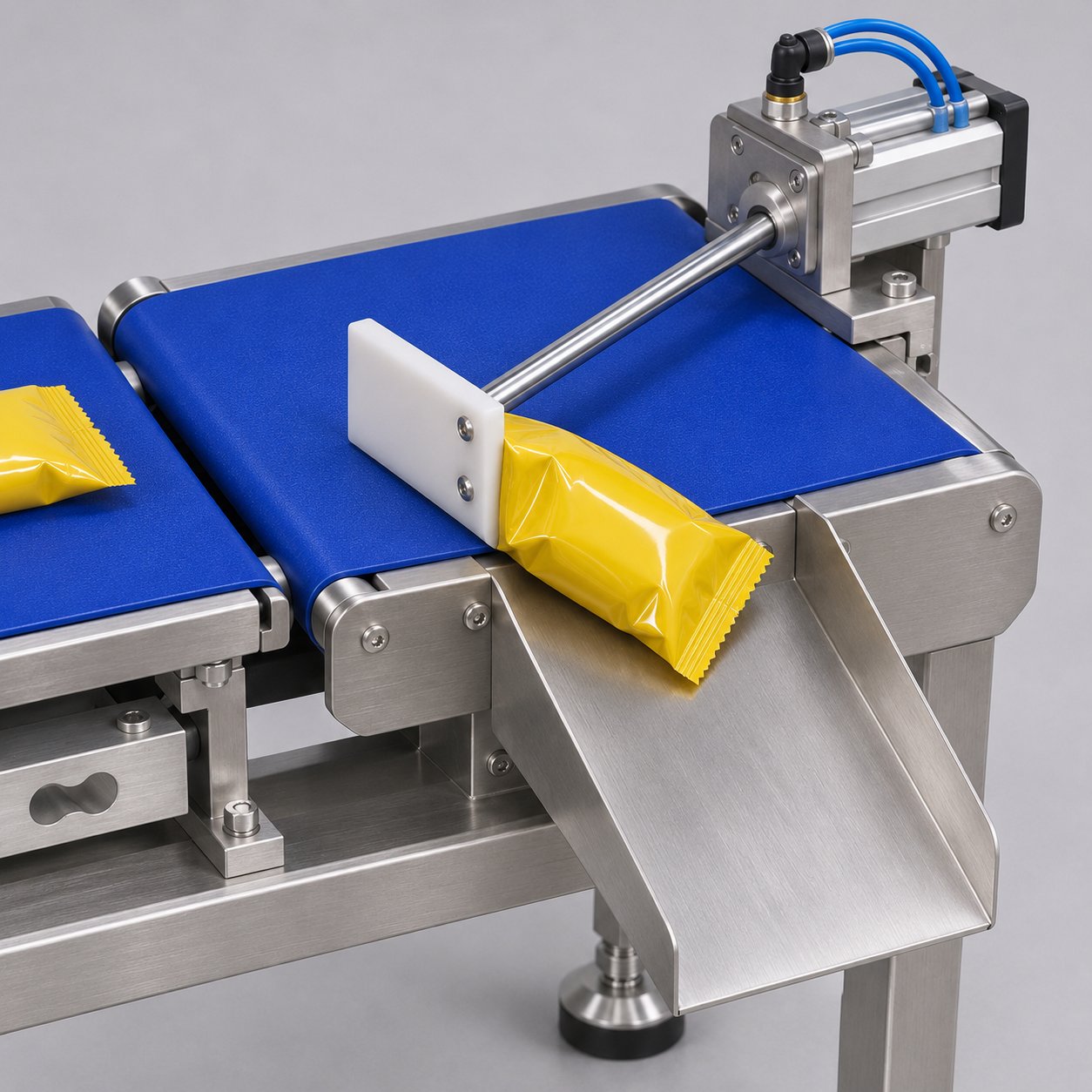
A pack outside the weight limits gets pushed off the line at once. A pneumatic pusher, air jet, or drop flap sends it to a reject bin. The operator checks the reject bin each hour to spot a filling drift early.
The machine logs every pack weight with a time stamp. The log proves the line met legal weight rules on any given day. A buyer or auditor can trace a single pack back to its production batch.
Accuracy is not one number on a data sheet. Speed, product, and the room around the machine all move the result.
A faster belt leaves the load cell less time to settle. A typical dynamic unit runs 60–200 packs per minute, and accuracy falls as speed rises. Match its speed to your filler, not the other way around.
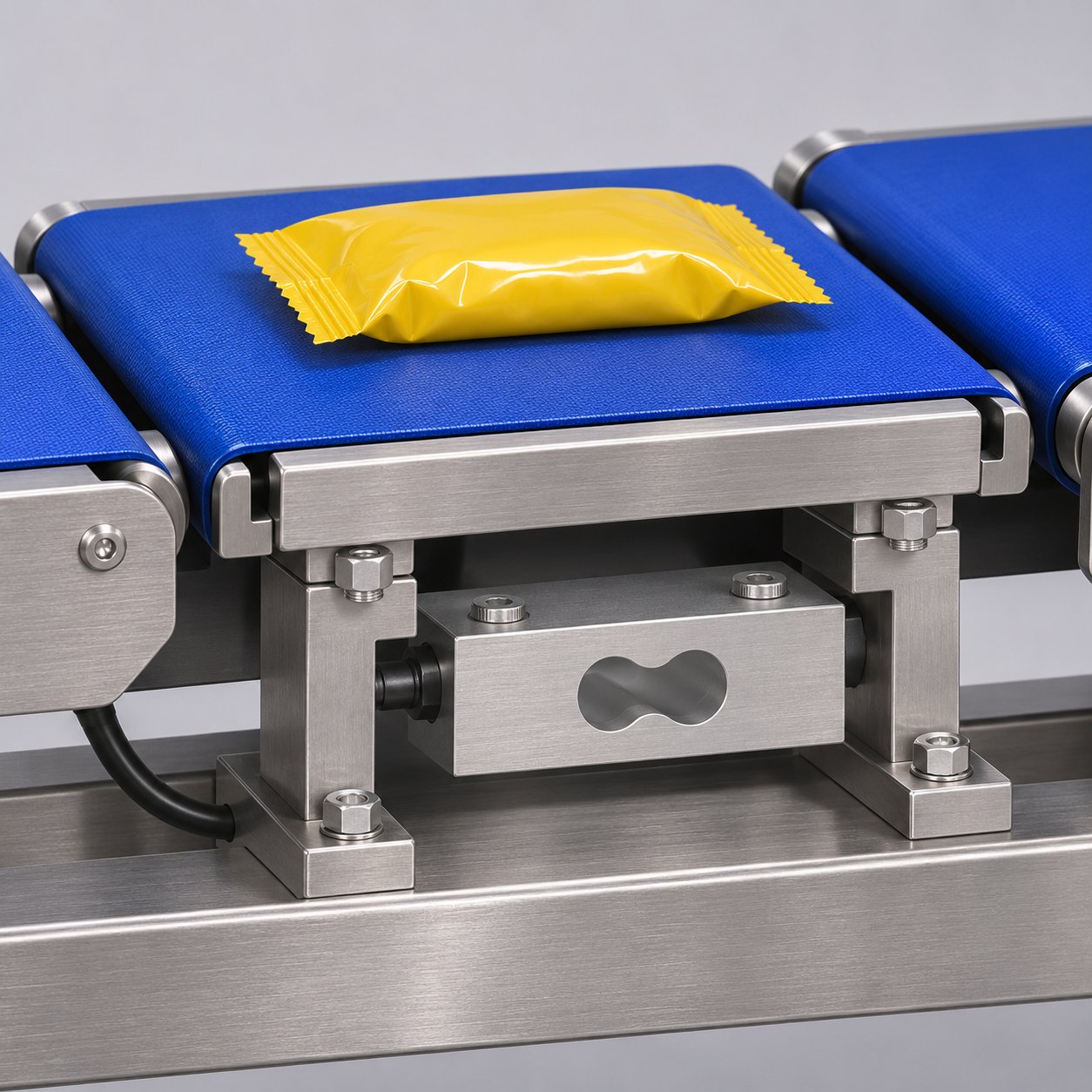
A tall, light pack wobbles on the belt and reads less steady than a flat pack. A heavy pack needs a stronger load cell, which reads small packs less fine. Test your own packs on the machine before you buy it.
Vibration from a nearby filler or conveyor shakes the load cell and adds noise. A draught from a door or fan pushes a light pack and shifts the reading. Place it on a solid floor, away from vibration and draughts.
A checkweigher is also a compliance tool. It keeps your packs inside legal weight rules and gives you the records to prove it.
OIML R 51 sets the rules for automatic catchweighing instruments, including checkweighers. It defines accuracy classes and the tests a machine must pass. A machine built to OIML R 51 fits most export markets without a second test.
In the United States, NIST Handbook 44 covers weighing devices used in trade. The FDA sets net quantity rules for food packs sold in the country. The weight log helps a food brand show both rules were met.
Keep weight logs for every batch, with time, product, and reject counts. An auditor asks for the log first, not the machine. Store the data for at least one year, or longer if your buyer asks for it.
Static and dynamic checkweighers suit different lines. Pick the type that fits your speed, your pack size, and your budget.
A static unit weighs one pack at a time on a still scale. It suits heavy packs, large packs, or a line with low output. It costs less to buy, but it needs an operator for every pack.
Use a static unit when packs are too heavy for a moving belt. It also suits a quality check point, where an operator weighs a sample of packs. A static scale costs less to keep, because it has fewer moving parts.
A dynamic unit weighs packs on the move, without stopping the line. A typical unit runs 60–200 packs per minute, which fits most food lines. It costs more, but it checks every pack at full line speed.
A dynamic unit needs a steady pack gap, so the infeed must space packs evenly. It also needs a stable belt speed, because speed changes shift the weight reading. Ask the supplier to test the heaviest and lightest packs at full line speed.
Start with your pack weight range, then your line speed. Add the reject system your line needs, and check the floor space it takes. Buy the smallest machine that still hits your accuracy target at full speed.
Match the reject system to your pack, not just to the machine. A pusher suits light boxes, while an air jet suits light bags and a drop flap suits heavy packs. Leave room for a second reject bin, so good packs and bad packs never mix.
The purchase price is only part of the cost. Changeover, cleaning, and giveaway decide what a checkweigher really costs to run.
A basic dynamic unit costs less than one with a metal detector built in. Options like a reject pusher, a printer, or a data link add to the price. List the options your buyer requires before you ask for a quote.
A recipe change means a new target weight and a belt clean. A typical changeover takes 10–20 minutes on a food line. Short changeovers matter most when you run several recipes a day.
A high reject rate wastes good packs and slows the line. Aim for a reject rate below 0.5% once the line is set up. Giveaway is the product you pay for but never sell, so keep it below 1%.
Start with your pack weight and line speed. Pick the checkweigher that hits your accuracy target, and keep the logs that prove compliance. When your line grows, scale it with LINK Machinery.
1. What speed can a checkweigher handle on a packaging line?
A typical dynamic unit runs 60–200 packs per minute. Match it to your filler speed, and test your own packs on the machine before you buy it.
2. Can one checkweigher check different pack sizes?
Yes, if the belt width and load cell cover your lightest and heaviest packs. Change the target weight and settings at each changeover, which takes 10–20 minutes.
3. How accurate is a checkweigher at high speed?
A typical dynamic unit holds ±0.5–2 g on small packs at full speed. Accuracy falls as speed rises, so test at your real line speed, not the brochure speed.
4. Does a checkweigher replace a multihead weigher?
No. A multihead weigher fills each pack to target weight, and this machine checks the filled pack. Use both: one cuts giveaway, the other catches errors.
5. How does a checkweigher handle wet or sticky products?
Use a belt that resists water and a load cell sealed against washdown. Clean the belt each shift, because sticky residue shifts the weight reading.
6. What records does a checkweigher keep for audits?
It logs every pack weight with time, product, and reject counts. Store the data for at least one year, and keep batch logs ready for any auditor.

Email : Molly@xmlk-machine.com
EMAIL us
Room 810, No. 35-2 Xinjing Road, Haicang, Xiamen, Fujian, China
Our Address
Tel : +86 18150150881
Whatsapp : +8618150150881
call us


 English
 français
 português
 ไทย