

A loose cap leaks, a tight cap cracks the bottle, and a slow changeover loses the order. You run a bottling line, and buyers expect every cap sealed and straight.
This guide shows how a capping machine protects your line. It covers cap types, torque control, selection, and running costs.
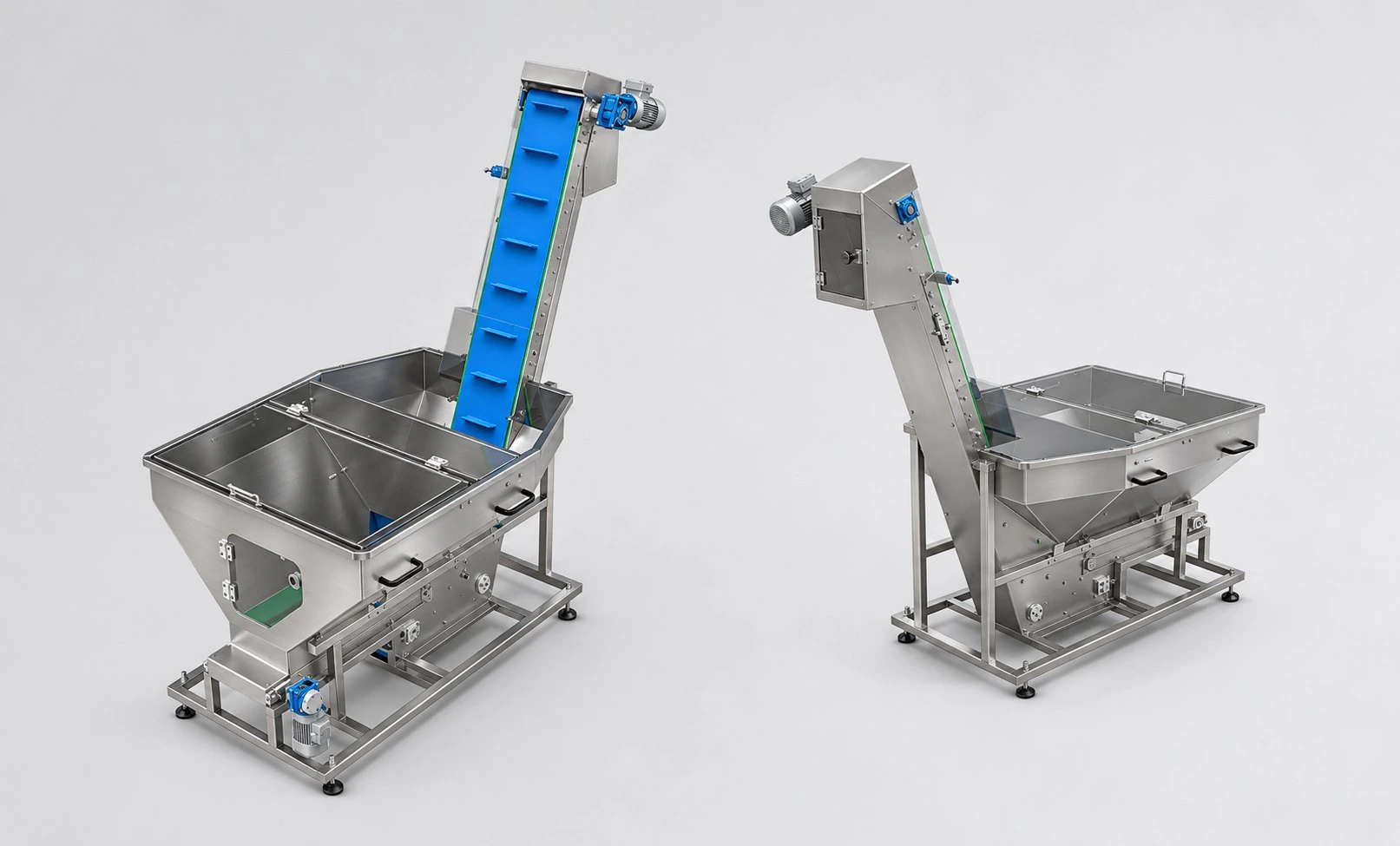
A capping machine feeds caps one by one to the bottle neck. A cap elevator lifts caps from a hopper and drops them into a chute. The chute lines each cap up the right way before it reaches the bottle.
Caps must arrive clean and dry, or they jam the chute. Keep the hopper covered and the caps free of dust.
Torque is the twist that tightens the cap. Too little torque leaks; too much torque cracks the bottle or strips the thread. A capping machine holds torque inside a set range on every bottle.
Check the seal with a torque tester after the cap is on. A good seal keeps the product fresh and the bottle leak-free.
A capping machine rejects bottles with a missing, tilted, or loose cap. A sensor checks each cap after the capping head. A bad bottle leaves the line at once, so it never reaches a carton.
Count the rejects each hour to spot a cap or bottle fault early. A fault caught early saves a whole batch.

A screw cap twists onto a threaded bottle neck. It suits water, juice, oil, and sauce bottles. A screw cap seals well and opens easily for the buyer.
Screw caps need a steady torque on every bottle. A torque that varies from bottle to bottle leaks on some and cracks others.
An ROPP cap is rolled onto the bottle neck and shows tampering at once. A press-on cap snaps onto the neck without a thread. Both suit glass bottles for drinks, wine, and spirits.
ROPP caps need a rolling head; press-on caps need a pressing head. Pick the head by the cap, not by the machine price.
A trigger cap sprays cleaner or liquid on demand. A pump cap doses lotion, soap, or sauce in one press. Both need a capping head that grips the cap body, not just the top.
Trigger and pump caps are larger and heavier than screw caps. Check the cap weight and size before you pick the feeder.
Quality is not one number on a data sheet. The cap, the bottle, and the feeder all move the result.
Torque control keeps every cap inside a set range. A magnetic clutch or a servo motor sets the torque on each head. The set value comes from the cap maker, not from a guess.
Test the torque with a tester on the first ten bottles of a run. A torque that drifts means the clutch needs a check.
A bottle that wobbles gets a tilted cap. The capping machine must hold the bottle still while the head turns. A neck guide and a steady belt keep tall bottles upright.
Glass bottles are heavy and stand steady on the belt. Light plastic bottles need a neck guide to stay upright. Check the tallest bottle in the range before ordering.
Caps must arrive one by one, the right way up. A jammed chute stops the line and spills caps on the floor. A good sorter feeds caps smoothly at full speed.
Keep the caps clean and dry in the hopper. Wet or dusty caps jam the sorter and tilt the cap.
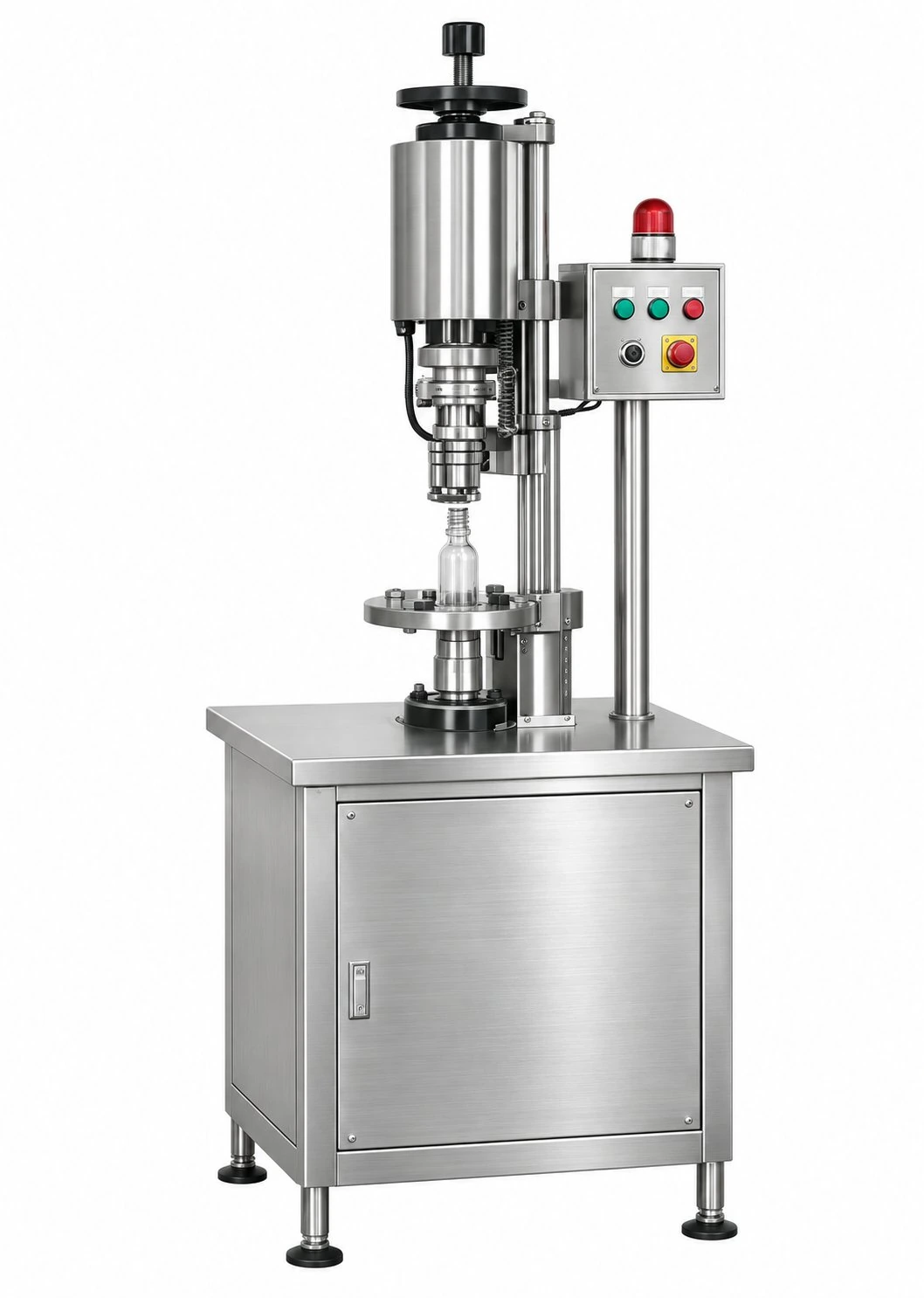
A single-head unit caps one bottle at a time. It suits small batches and low output. It caps slower than a rotary unit but changes over faster.
Use a single-head unit when you change caps often. It costs less to buy and changes over faster than a rotary unit.
Check the cap and bottle size against the head. A typical inline unit takes bottles 50–300 mm high and 30–100 mm wide, with caps of 15–70 mm.
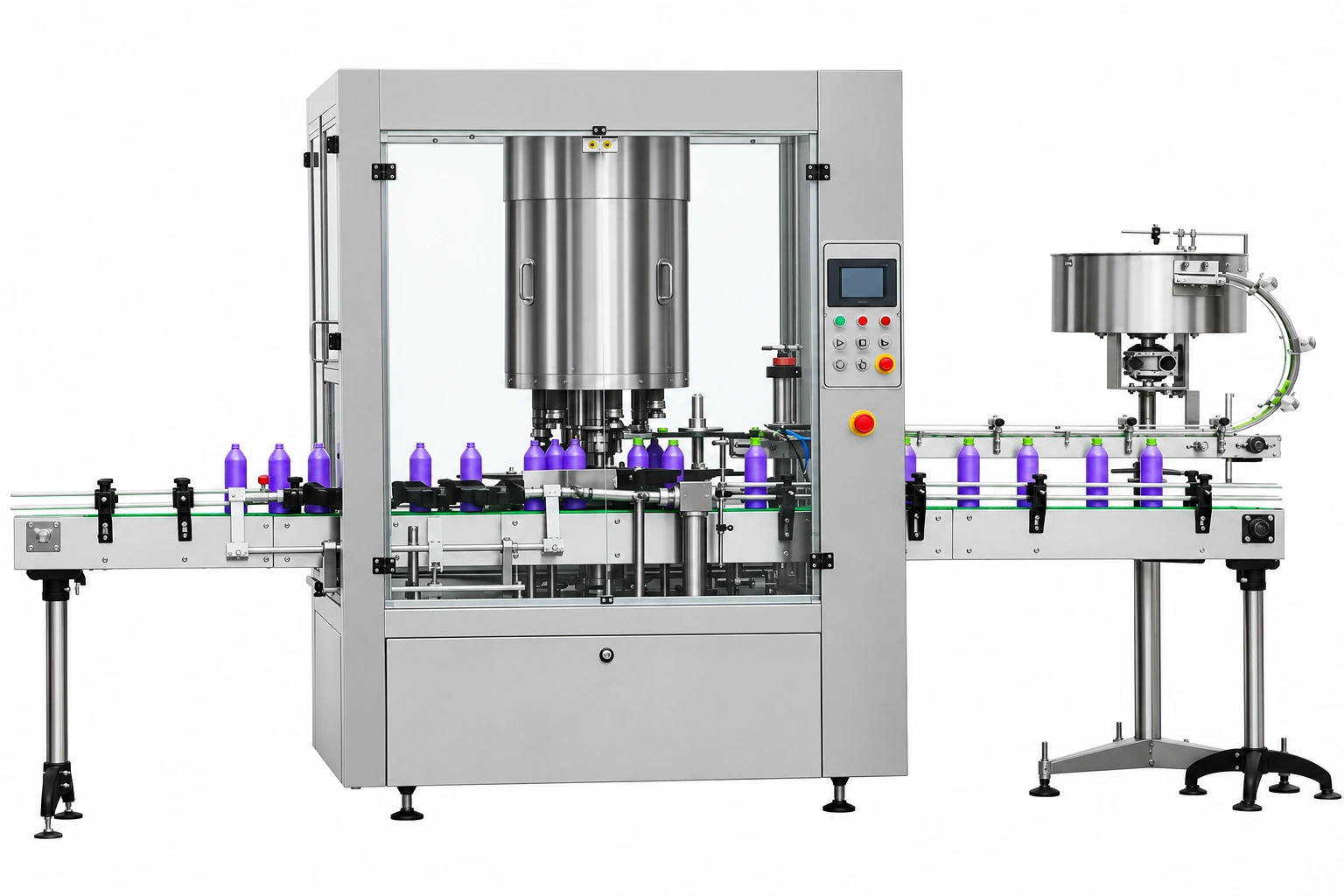
A rotary unit caps many bottles at once on a turning wheel. It suits high output and steady bottle sizes. It keeps up with a fast filler on a full line.
Use a rotary unit when the line runs one bottle size all day. It costs more, but it keeps up with a fast filler.
Check the head count against the speed you need. A typical rotary unit runs 40–200 bottles per minute, and more heads mean a higher speed.
Start with the cap type, then the bottle size. The machine must fit both, or the line will jam. Then set the speed target from your filler, not the other way around.
Match the machine to four numbers: cap type, bottle size, speed, and changeover time. A single-head unit runs 20–40 bottles per minute; a rotary unit runs 40–200 bottles per minute. Set the cap waste below 0.5% and the changeover at 15–30 minutes.
Check the torque and the bottle size as well. A 28 mm cap takes about 12–21 inch-pounds, and a 38 mm cap takes about 17–26 inch-pounds. A typical inline unit holds torque at 0.5–8 N·m, with an accuracy of ±5%. Ask the cap supplier for the torque band of your cap, and set the machine to it.
Test the real cap, the real bottle, and the real line speed before you order. Check the changeover time, the cleaning access, and the floor space it takes. Buy the smallest machine that still hits the speed target at full output.
A rotary unit costs more than a single-head unit of the same speed. Options like a cap elevator, a torque tester, or a reject unit add to the price. List the options the buyer requires before asking for a quote.
A servo head costs more than a clutch head but holds torque better. A clutch head costs less and suits simple screw caps.
A cap change means a new chuck, a new guide, and a clean. A fast changeover keeps the line running when orders switch often. Plan the chucks and the tools before the line stops.
Label each chuck by cap size, so changeover never waits on parts. Clean the chute each shift, because cap dust builds up fast.
A tilted or loose cap wastes a cap and a bottle. Keep cap waste below 0.5% of caps once the line is set up. A jammed chute stops the line, so keep the caps clean and dry.
Check the cap torque on the first ten bottles of each run. A torque fault caught early saves a whole batch.
A capping machine is as good as its match to the cap and bottle. Pick the machine for the cap type, test it with caps and bottles, and keep it clean. Talk to LINK Machinery, a CE and RoHS certified China factory, and get a machine sized for the line.
1. What capping machine suits screw caps?
A single-head unit with a magnetic clutch suits most screw caps. The clutch slips at the set torque, so every bottle seals the same. Test the torque on the first ten bottles of a run.
2. Can one capping machine handle different cap sizes?
Yes, if the chucks and guides cover your smallest and largest caps. A line with two cap sizes needs two chucks and two guides. Change the chuck, the guide, and the settings at each changeover.
3. How fast can a capping machine run?
A single-head unit fits small batches and low output. A rotary unit fits high output and one bottle size all day. For example, a line that caps 10,000 bottles a day needs a rotary unit.
4. How does a capping machine control torque?
A magnetic clutch slips when the torque hits the set value. A servo motor reads the torque and adjusts it on every bottle. Test the torque with a tester on the first ten bottles of a run.
5. Does a capping machine work with glass and plastic bottles?
Yes, if the neck guide and the belt fit the bottle. Glass bottles stand steady; light plastic bottles wobble more. Slow the belt a little when the bottle is tall and light.
6. What changeover time does a capping machine need?
A changeover has three jobs, and each one stops the line. Time the first changeover on the real line, and use that time in the production plan. A line that runs three cap sizes a day needs the shortest changeover it can get.

Email : Molly@xmlk-machine.com
EMAIL us
Room 810, No. 35-2 Xinjing Road, Haicang, Xiamen, Fujian, China
Our Address
Tel : +86 18150150881
Whatsapp : +8618150150881
call us


 English
 français
 português
 ไทย