

In the vast market of oil presses, there are many types, each with its own unique advantages to meet the needs of different users.
Oil press types
(1) Screw oil press is a common and popular type
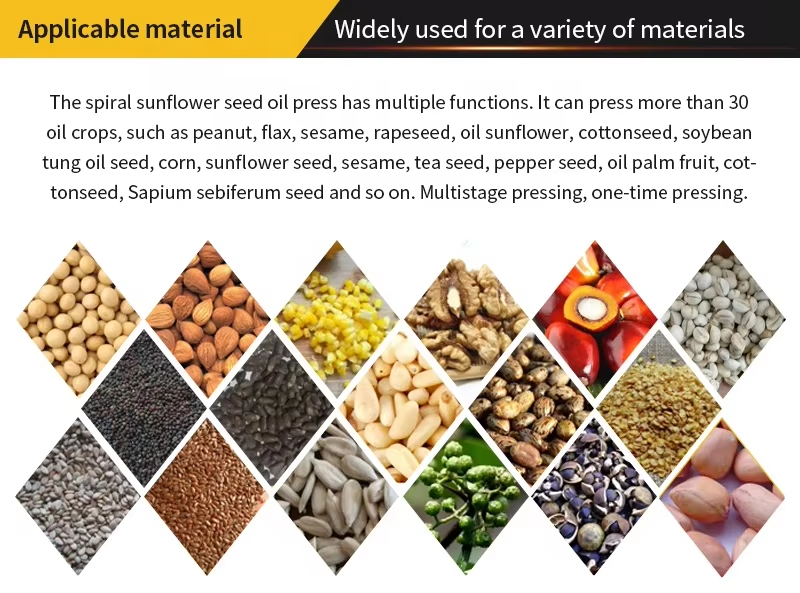
Its working principle is to push the oil forward and squeeze it continuously through the rotation of the screw shaft, and the pressure gradually increases, so that the oil can be squeezed out efficiently. The advantage of this type of oil press is that the oil yield is relatively high, and it can process a variety of different oil crops, such as peanuts, soybeans, rapeseed, etc., and the production efficiency is relatively considerable. It is suitable for small and medium-sized oil presses and some commercial users who have certain requirements for oil output.
For example, for a small oil press that needs to process hundreds of kilograms of oil every day, the screw oil press can complete the oil pressing task in a shorter time and ensure a stable oil yield, bringing good economic benefits to the enterprise.
(2) Hydraulic oil presses are favored by many users who have strict requirements on oil quality due to their uniform pressure and high oil quality. It uses the hydraulic principle to slowly squeeze the oil under high pressure. The squeezed oil is clear in color, rich in flavor, low in impurities, and retains more nutrients. It is particularly suitable for the production of high-end edible oils, such as olive oil and walnut oil. Some small oil mills that focus on product quality and characteristics will choose hydraulic oil presses to create high-quality specialty oils to meet the needs of consumers who pursue a healthy and high-quality life. Although its production speed may be slightly slower than that of a screw oil press, its advantage in oil quality makes it occupy a place in the high-end oil market.
Key components and functions of oil presses
(1) Pressing chamber: The pressing chamber is one of the core working parts of the oil press, and its internal structure design is crucial. High-quality pressing chambers are usually made of wear-resistant and corrosion-resistant metal materials, and the surface is specially treated to ensure that it can maintain a good working condition during the long-term pressing process. The inner wall of the pressing chamber has precise spiral patterns. The design of these patterns can guide the oil to form a suitable pressure distribution in the pressing chamber, ensuring that the oil is fully squeezed and improving the oil output efficiency and quality.
(2) Screw: As the main power transmission component of the oil press, the screw directly affects the oil pressing effect. The material of the screw is generally high-strength alloy steel with good toughness and wear resistance. Its shape is designed to be spiral, and the pitch and thread depth will be optimized according to different oil pressing requirements. When working, the high-speed rotation of the screw pushes the oil forward and generates a strong extrusion force to separate the oil from the oil.
For example, for rapeseed with a high oil content, the design of the screw will focus more on providing a larger pressure and a suitable propulsion speed to ensure that the oil in the rapeseed can be squeezed out to the maximum extent, while ensuring that the squeezed oil is pure and does not contain excessive impurities.
(3) Motor: The motor is the power source of the oil press, and its performance is directly related to the working efficiency and stability of the oil press. Generally speaking, the motor power of the oil press depends on the size and production capacity of the equipment, ranging from a few kilowatts to tens of kilowatts.
Operation process of the oil press
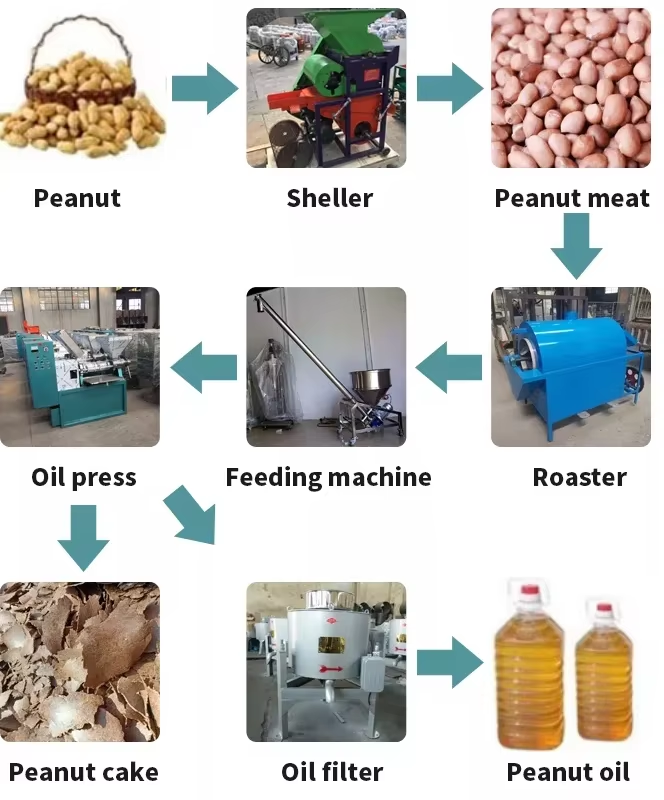
Oil pretreatment: Before the oil is put into the oil press, a series of pretreatment steps are required. The first step is screening to remove impurities in the oil, such as stones, soil, metal fragments, etc. If these impurities enter the oil press, they may damage the key components of the equipment, affecting the oil pressing effect and equipment life. For example, when processing soybeans, impurities such as small stones mixed in soybeans are screened out through equipment such as vibrating screens to ensure the purity of the raw materials. The next step is frying or drying. The purpose of this step is to adjust the moisture content and temperature of the oil to achieve the best pressing conditions.
Oil pressing operation: put the pre-treated oil into the feed hopper of the oil press and start the oil press. As the motor drives the screw to rotate, the oil is slowly fed into the pressing chamber. Under the action of gradually increasing pressure in the pressing chamber, the oil begins to separate from the oil and flows out through the oil outlet of the oil press and is collected in a special container. During the oil pressing process, the operator needs to pay close attention to the working status of the oil press, including parameters such as the current of the motor, the temperature of the pressing chamber, the speed and quality of oil output.
Oil residue treatment: The oil residue produced during the oil pressing process also needs to be reasonably treated. On the one hand, the oil residue still contains a certain amount of oil, which can be further recovered through secondary pressing or other extraction methods to improve the utilization rate of raw materials and increase economic benefits.
Maintenance and maintenance of oil press
Daily cleaning: During the operation of the oil press, some oil residue and grease will remain on the surface and internal parts of the equipment, so daily cleaning is very important. After each use, the feed hopper, pressing chamber, oil outlet, oil residue outlet and other parts of the oil press should be cleaned in time, and the surface of the equipment should be wiped with a clean rag to remove oil and impurities to prevent their accumulation from causing equipment corrosion and bacterial growth. For the inside of the pressing chamber, special cleaning tools, such as a long-handled brush, combined with appropriate detergents, can be used to clean the remaining oil residue, but be careful to avoid damaging the inner wall structure of the pressing chamber.
Component inspection and replacement: Regularly inspect the key components of the oil press, such as the pressing chamber, screw, bearings, etc., to check whether there is wear, deformation or damage. If the inner wall of the pressing chamber is severely worn, it may affect the pressing effect and oil quality, and needs to be replaced in time; if the thread of the screw is unevenly worn, it will lead to uneven pressure distribution and affect the oil output rate. At this time, it is also necessary to consider replacing the screw. Bearings are key components that support the rotation of the screw. The lubrication and wear degree of the bearings should be checked regularly. Lubricating oil should be added or worn bearings should be replaced in time to ensure the smooth rotation of the screw, reduce the vibration and noise of the equipment, and improve the working efficiency and stability of the oil press.
Equipment lubrication: Many moving parts of the oil press require good lubrication to work properly and reduce wear and energy consumption. For example, the bearings, transmission chains and other parts of the screw should be regularly coated with an appropriate amount of lubricating oil. When choosing lubricating oil, it is necessary to select the appropriate model and brand according to the working environment and requirements of the equipment to ensure that the lubricating oil has good lubrication performance and high temperature resistance and antioxidant properties.
Application scenarios of oil presses
Rural small oil presses: In rural areas, small oil presses are one of the important application scenarios of oil presses. Farmers bring their own peanuts, soybeans, rapeseed and other oil crops to the oil press for processing, and squeeze out fresh and pure edible oil for their own consumption. This method not only ensures the quality and safety of edible oil, but also allows farmers to enjoy the benefits of their own labor. Small oil presses generally choose moderately priced and easy-to-operate screw oil presses, which can process hundreds of kilograms of oil every day to meet the oil pressing needs of surrounding villagers.
Commercial edible oil production enterprises: For large-scale commercial edible oil production enterprises, oil presses are one of the core equipment on their production lines. These enterprises usually use oil presses with a high degree of automation and large production capacity, such as large screw oil presses or continuous oil presses, which can process dozens or even hundreds of tons of oil every day.
by reasonably selecting the type of oil press, understanding the functions of its key components, mastering the correct operating procedures, maintaining the equipment and clarifying its application scenarios, users can give full play to the advantages of the oil press, achieve efficient, high-quality and safe oil production, and meet different market needs. Whether it is for self-use and self-sales in small rural oil presses, large-scale industrial production of commercial edible oil production enterprises, or the refined market field of specialty oil processing, oil presses play an indispensable and important role, injecting strong impetus into the development of the edible oil industry.

Email : Molly@xmlk-machine.com
EMAIL us
Room 820, No. 289-7, wengjiao Road, xiamen, Fujian, China
Our Address
Tel : +86 18150150881
Whatsapp : +8618150150881
call us


 English
 français
 português
 ไทย
ไทย